






Saw palmetto may help some people with androgenetic alopecia, the hormone-sensitive type of pattern hair loss, but the evidence is still too limited to call it a reliable standalone treatment. It is best understood as a cautious DHT-focused supplement, not a proven replacement for minoxidil, finasteride, or FDA-cleared Laser Phototherapy devices.
Hair loss products love pretending every ingredient is either useless or miraculous. But saw palmetto sits in the middle. Promising in places. Patchy in others.
What Is Saw Palmetto?
Saw palmetto is the common name for Serenoa repens, a palm plant whose berries are used in herbal supplements. It has been studied most heavily for urinary symptoms linked with benign prostatic hyperplasia, not originally as a hair-loss treatment. Hair brands brought it into the thinning-hair conversation because of its possible activity around androgen pathways.
In supplement bottles, saw palmetto usually appears as an extract, softgel, oil, powder, or part of a “DHT support” blend. That last phrase can get slippery. A blend might sound clinically serious while hiding the exact amount of each ingredient behind a shiny label and a font that looks expensive.
Very annoying behavior from a bottle.
Saw palmetto is native to the southeastern United States, and its berries have a long traditional-use history, including use by Native American communities as food and medicine. That history is interesting, but it should not be stretched into proof that it regrows hair. Traditional use tells us people found the plant useful. Clinical evidence has to answer a narrower question: does it meaningfully help androgenetic alopecia in real humans with thinning hair?
That distinction matters.
Because hair-loss marketing loves taking an old plant, putting it in a glossy capsule, and acting like the ancestors left us a PubMed trial in berry form.
Why is saw palmetto used in hair supplements?
Saw palmetto is used in hair supplements because it may affect 5-alpha-reductase, the enzyme involved in converting testosterone into dihydrotestosterone, usually shortened to DHT. DHT matters in androgenetic alopecia because genetically sensitive follicles can gradually miniaturize under androgen influence, producing shorter, finer, less visible hair over time.
If the hair loss is DHT-related, an ingredient that may interfere with that pathway becomes worth discussing. Worth discussing is not the same thing as proven to work.
That does not mean saw palmetto automatically stops hair loss. A pathway is not a promise. The body is not a vending machine where you press “DHT blocker” and receive “thicker hair” by Friday.
Saw palmetto may be relevant to hair loss when the hair loss is DHT-related. That is narrower, less sexy, and much more honest.
Checkout our Ultimate Hair Growth Products Bundle including shampoos, conditioners and vitamins that contains beneficial ingredients like saw palm extract for hair repair.
What Kind of Hair Loss Is Saw Palmetto Supposed to Help?

Saw palmetto is mostly relevant to androgenetic alopecia
Saw palmetto is mainly discussed for androgenetic alopecia, also called pattern hair loss. In men, this often shows up as temple recession, a thinning crown, or a hairline that starts behaving like it has somewhere else to be. In women, it more often appears as a widening part, diffuse crown thinning, or a ponytail that feels smaller over time.
Androgenetic alopecia is linked with DHT, 5-alpha-reductase activity, androgen receptors, and follicle miniaturization. Miniaturization means the follicles keep producing hair, but the strands become shorter, finer, and less cosmetically useful. Like your scalp is printing low-resolution versions of the old hair.
This is where saw palmetto makes the most theoretical sense. If DHT is involved, an ingredient that may affect DHT metabolism becomes at least worth discussing.
Saw palmetto is not a universal shedding fix
Not every hair-loss problem is DHT. Sudden diffuse shedding can be telogen effluvium, which may follow illness, major stress, surgery, childbirth, crash dieting, low protein intake, iron deficiency, thyroid problems, or medication changes.
Patchy hair loss may point toward alopecia areata. Hair loss with pain, scaling, redness, pustules, or scarring needs a clinician’s eyes sooner rather than later. And traction alopecia, which can happen after repeated tension from hairstyles, is a different problem again. Saw palmetto cannot politely negotiate with a tight ponytail.
This is why diagnosis matters. The American Academy of Dermatology says effective treatment starts with identifying the cause, and dermatologists may use scalp exams, hair-pull tests, blood tests, or scalp biopsy when needed.
Micro-check: pattern thinning or sudden shedding?
Ask yourself:
- Did the thinning arrive slowly over months or years?
- Is the part widening or the crown thinning?
- Did heavy shedding start two to three months after illness, childbirth, dieting, surgery, stress, or a new medication?
- Is there itching, burning, redness, scaling, patchiness, or tenderness?
If the answer sounds more sudden, inflamed, patchy, or body-stress-related, do not let a supplement bottle become your dermatologist. That bottle did not go to medical school.
How Might Saw Palmetto Affect DHT?
Testosterone can be converted into DHT by an enzyme called 5-alpha-reductase. In people genetically prone to androgenetic alopecia, DHT can affect scalp follicles in certain areas, contributing to miniaturization over time.
Finasteride and dutasteride work on this pathway more directly as prescription 5-alpha-reductase inhibitors. They reduce the conversion of testosterone into DHT, which is why they are used in androgenetic alopecia and prostate-related conditions.
Saw palmetto gets discussed because it may act somewhere around that same pathway. But no, that does not make it the same thing.
This is where the “natural Propecia” nickname starts causing trouble. Finasteride, sold under brand names including Propecia, has a clearer pharmaceutical action on 5-alpha-reductase and has been shown to reduce DHT more strongly and predictably than saw palmetto. Saw palmetto may sit near the same conversation, but it does not behave like the same intervention.
Calling saw palmetto “natural finasteride” makes the mechanism sound cleaner than the evidence allows. It also quietly skips the awkward part: saw palmetto products vary wildly. Extract type, dose, fatty acid content, formulation, and quality control can all change what the user is actually taking.
So yes, same pathway neighborhood.
Different house.
Where saw palmetto fits, theoretically
The working theory is that saw palmetto may inhibit 5-alpha-reductase and reduce DHT-related pressure on susceptible follicles. That sounds tidy. Almost too tidy, honestly.
The older theory around saw palmetto is not only that it may reduce DHT formation, but that it may interfere with some DHT activity around the follicle. That sounds promising, yes. But the strength of that effect in scalp hair loss is still uncertain, and it should not be described like a prescription-strength DHT blocker wearing a botanical disguise.
The book version of the idea is simple: saw palmetto may reduce a small portion of DHT activity at the scalp. The clinically careful version is even narrower: saw palmetto may have some anti-androgenic activity, but the human hair-loss evidence is still limited, inconsistent, and product-dependent.
The issue is that mechanistic plausibility is not the same as visible regrowth. Something can make sense in a pathway diagram and still produce modest, inconsistent, or hard-to-measure results in real people with real scalps, inconsistent routines, and supplement labels written like treasure maps.
Saw palmetto may influence a pathway involved in pattern hair loss, but current evidence does not prove that it reliably regrows hair or works for everyone with thinning.
Why “natural finasteride” is a sloppy shortcut
Saw palmetto is sometimes called natural finasteride because both are discussed in relation to DHT. But that comparison is too neat. Finasteride is a regulated prescription medication with stronger clinical support and clearer dosing. Saw palmetto is a supplement category with variable extracts, strengths, blends, and product quality.
One study comparing Serenoa repens with finasteride in men with androgenetic alopecia found that both groups had some improvement, but finasteride performed better. That is the cleanest version of the point. Saw palmetto is not nothing. It is also not finasteride in a leaf costume.
What did the “four-month” saw palmetto study actually suggest?
One frequently cited saw palmetto study reported that some participants saw measurable improvement after about four months, including an increase in hair growth in a portion of users. That is encouraging, but it is not the same as proving saw palmetto reliably regrows hair for most people.
The better read is cautious: saw palmetto may help some users with androgenetic alopecia, but the evidence is still too limited to make confident, broad claims. Study size, formulation, dose, follow-up length, and whether the result repeats in other groups all matter.
That is the part supplement ads tend to swallow whole.
A single encouraging result can raise the eyebrow. It cannot carry the whole treatment plan on its back.
Does Saw Palmetto Work for Women’s Hair Loss?
It may be relevant in female pattern hair loss, but diagnosis comes first
Saw palmetto may be relevant for some women with female pattern hair loss, especially when androgen sensitivity is part of the picture. But women’s hair loss is a diagnostic minefield in tiny ballet shoes. Iron deficiency, thyroid disease, postpartum shedding, PCOS, medication changes, stress-related shedding, traction, scalp inflammation, and scarring alopecias can all confuse the pattern.
The American Academy of Dermatology says female pattern hair loss can show as a widening part, thinner ponytail, or more visible scalp, and that dermatologists may use more than one treatment. For female pattern hair loss, minoxidil remains the most recommended treatment, with 2 percent and 5 percent products approved for women.
So, can women use saw palmetto for hair loss? Some may discuss it with a clinician. But “I saw it in a hair vitamin” is not a diagnosis.
Safety cautions for women
Saw palmetto is not recommended during pregnancy or breastfeeding, and extra caution is sensible for people trying to conceive or managing hormone-sensitive conditions. NCCIH notes that saw palmetto may be unsafe during pregnancy and breastfeeding, and the MSD Manual also advises that children, pregnant people, people who may become pregnant, and breastfeeding people should not take it because of possible hormonal effects.
Women taking birth control, hormone therapy, anticoagulants, or other medications should speak with a healthcare professional before using saw palmetto. Herbal does not mean inert. Sometimes “natural” simply means the side effects did not arrive wearing a lab coat.
For women, saw palmetto may be worth discussing if female pattern hair loss is confirmed and pregnancy, breastfeeding, medication, and hormone-related concerns are not present. It should not replace evaluation, and it should not delay better-supported treatment when hair loss is progressing.
Does Saw Palmetto Work for Men’s Hair Loss?
Saw palmetto is most plausible for men with mild-to-moderate androgenetic alopecia, especially crown thinning or early hairline recession. It makes the most sense when the hair loss appears gradual and pattern-based rather than sudden, patchy, inflamed, or linked to illness or stress.
Men who are nervous about prescription DHT blockers often look at saw palmetto because it feels gentler and less medical. That feeling is understandable. It is also not the same as proof.
The finasteride comparison men need to see
Finasteride has stronger evidence and more direct pharmaceutical activity against 5-alpha-reductase. Saw palmetto may affect a related pathway, but it has not shown finasteride-level reliability. The comparison study summarized in the 2020 review found better response rates with finasteride than with Serenoa repens.
So saw palmetto may be a lower-commitment option to discuss, but it should not be treated as the strongest anti-DHT tool available.
If your hairline is moving every few months, a long supplement experiment is not harmless.
The receipt is one thing. The follicles are another.
Oral Saw Palmetto vs Topical Saw Palmetto: Which Is Better?
Oral saw palmetto
Oral saw palmetto appears in the research as capsules, oils, or extracts. Some studies used standardized forms, including the 2023 VISPO trial, while older research used oral supplements or combination formulas.
This matters because a studied extract is not automatically the same as a random capsule. Dose, standardization, extraction method, and fatty acid or phytosterol content may all change what the product actually delivers. The supplement shelf likes to act like everything is interchangeable. It is not.
Topical saw palmetto
Topical saw palmetto has also been studied, including in the 2023 standardized saw palmetto oil trial. A leave-on topical product is more biologically plausible than a rinse-off shampoo because contact time matters. If something touches your scalp for 45 seconds and then spins down the drain, expectations should stay modest.
Still, topical does not automatically mean effective. The formulation, concentration, vehicle, and study design all matter.
The problem with shampoos and blends
Saw palmetto shampoos may help the scalp feel cleaner or make hair feel nicer, depending on the formula. But there is not strong evidence that rinse-off saw palmetto shampoos meaningfully treat androgenetic alopecia.
This is where the old herbal-use background can get abused. Saw palmetto berries may have traditional medicinal history, but a modern hair shampoo, gummy, capsule, serum, and proprietary “DHT complex” are not interchangeable just because they borrow the same plant name.
The plant is one thing.
The product is another.
And the evidence has to match the product being sold, not the romantic idea of the ingredient.
A shampoo can be useful grooming. That is not the same thing as changing follicle behavior.
And blends? They are even messier. Multi-ingredient products make it harder to know whether saw palmetto did anything, whether another ingredient helped, or whether the improvement was natural fluctuation. The 2020 review included products with different formulations, which is one reason broad claims need restraint.
What Dose of Saw Palmetto Is Used for Hair Loss?
One commonly cited dose in hair-loss research is 320 mg daily, especially in the study comparing Serenoa repens with finasteride in men. Other work has used different extracts, oils, topical formats, or combination formulas, which is exactly why saw palmetto dosing gets slippery fast. A berry extract is not automatically equal to another berry extract just because both labels say “saw palmetto.”
Please do not turn 320 mg into a dare.
More is not automatically better. Supplements do not become smarter because the capsule got bigger.
Other studies use different forms, including standardized oils and proprietary extracts, so there is no single dose that can be responsibly declared “the” hair-loss dose for everyone.
Please do not turn that number into a dare. More is not automatically better. Supplements do not become smarter because the capsule got bigger.
Why extract quality matters
Quality matters because saw palmetto products are not all the same. Some use standardized extracts. Some use whole-berry powder. Some specify fatty acids or phytosterols. Some hide behind proprietary blends and vibes. That last one is not a scientific category, but you know exactly the type.
The 2023 trial used standardized saw palmetto oil with 2 to 3 percent beta-sitosterol, which is far more specific than “contains saw palmetto” on a label.
Supplement labels are not clinical trials
Dietary supplements are regulated differently from drugs. FDA says it does not approve dietary supplements before they are marketed, and manufacturers are responsible for evaluating safety and labeling before sale. FDA also says it generally does not approve supplement claims or labeling before use.
So when a bottle says “DHT support,” read that as marketing language until the product gives you exact amounts, testing standards, and evidence that matches the actual formula.
How Long Does Saw Palmetto Take to Work for Hair Loss?
Hair grows slowly. Painfully slowly, if you are checking the mirror like it owes you money.
The 2023 saw palmetto oil study ran for 16 weeks. Many hair-loss treatments need months before you can judge them fairly. AAD notes that minoxidil often takes 6 to 12 months to show whether it is helping, which is a useful reality check for any hair-growth plan.
Two weeks is not a verdict. It is barely a polite introduction.
What counts as early progress?
Early progress may look like reduced shedding, a more stable part line, less visible worsening in the crown, or improved hair count in standardized photos. A change in hair “feel” can be nice, but it does not prove follicle regrowth.
Use the same lighting. Same angle. Same hairstyle. Same wash day if possible.
Your bathroom mirror is dramatic and should not be the lead investigator.
What counts as failure?
Continued visible worsening after a fair trial, side effects, sudden shedding, or new scalp symptoms should change the plan. If you are losing time while avoiding better-supported treatments, that matters too.
Hair loss is not just cosmetic for many people. It can feel weirdly intimate, like your body is editing your reflection without permission. So yes, patience matters. But so does not waiting forever.
Is Saw Palmetto Safe?
Common side effects
Saw palmetto is generally well tolerated in research, but side effects can happen. NCCIH lists mild and infrequent adverse effects such as digestive symptoms, dizziness, and headache.
Other reports and clinical summaries also mention possible nausea, diarrhea, fatigue, and rare concerns such as liver or pancreatic issues, though serious events appear uncommon. The safe editorial move is not to frighten readers. It is to remind them that a supplement can still do things in the body.
Who should avoid or pause before using saw palmetto?
Avoid or seek medical guidance before saw palmetto if you are pregnant, breastfeeding, trying to conceive, under 18, taking medications, using hormone therapy, taking blood thinners, managing a hormone-sensitive condition, or preparing for surgery. NCCIH specifically warns that saw palmetto may be unsafe during pregnancy and breastfeeding, and FDA’s broader supplement guidance emphasizes that supplements can carry risks and are not approved for safety and effectiveness before marketing.
If you have unexplained hair loss and other symptoms, do not self-treat for months while the real cause keeps tapping its foot in the corner.
Can saw palmetto affect hormones?
Saw palmetto is discussed for hair because it may affect androgen metabolism. That does not mean every person will feel hormonal changes. But it does mean the ingredient is biologically active, which is why pregnancy, breastfeeding, hormone-sensitive conditions, and medication use need caution.
This is the tiny contradiction many “natural” product pages avoid: the ingredient is marketed as powerful enough to affect DHT, then described as gentle enough to be treated casually.
Pick a lane.
Saw palmetto appears well tolerated for many adults in studies, but it is still a biologically active supplement. Treat it like something that can affect the body, not like a decorative gummy with a palm tree on the bottle.
Saw Palmetto vs Minoxidil, Finasteride, and Laser Phototherapy
Saw palmetto vs minoxidil
Minoxidil has stronger clinical support than saw palmetto for pattern hair loss. AAD says minoxidil can help early hair loss and may help prevent further loss, though it cannot regrow an entire head of hair. For female pattern hair loss, AAD says 2 percent and 5 percent minoxidil products are FDA-approved and that minoxidil is the most recommended treatment.
Saw palmetto and minoxidil are not the same kind of intervention. Saw palmetto is usually discussed around DHT. Minoxidil is a topical medication with a different clinical profile and much stronger treatment history.
Saw palmetto vs finasteride
Finasteride is a prescription medication that inhibits 5-alpha-reductase and reduces conversion of testosterone into DHT. It is more directly tied to the androgen pathway than saw palmetto and has stronger clinical support for androgenetic alopecia.
Saw palmetto may be appealing to people who do not want prescription antiandrogens. Fair. But the evidence does not support calling it equal to finasteride. The more honest comparison is weaker, less standardized, and potentially useful for some people.
Saw palmetto vs Laser Phototherapy
Laser Phototherapy is a non-drug, scalp-targeted device approach. In published literature, low-level light/laser therapy has been studied for pattern hair loss, and a systematic review and meta-analysis of FDA-cleared home-use devices found significant increases in hair density compared with sham devices.
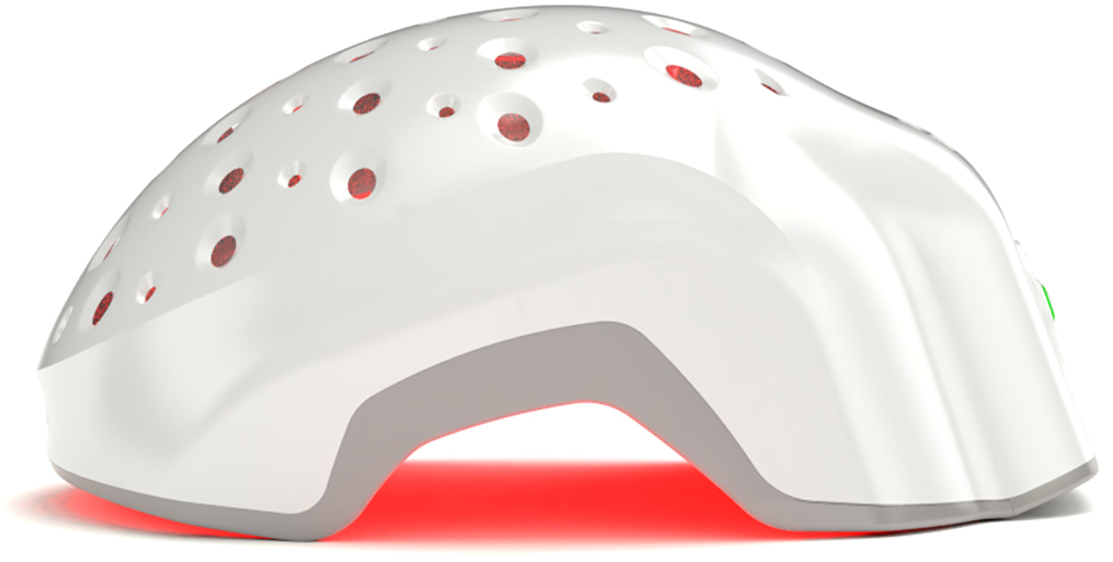
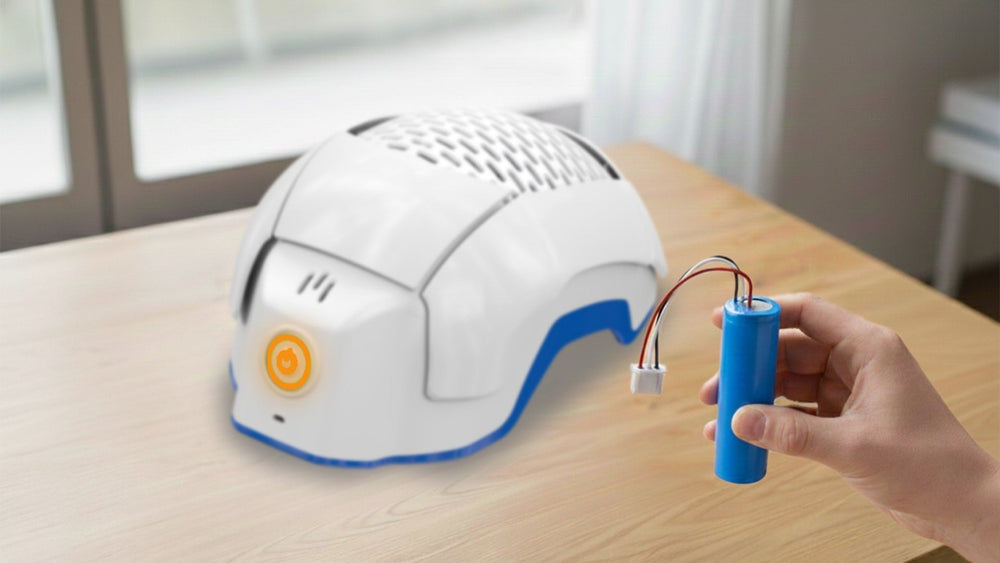
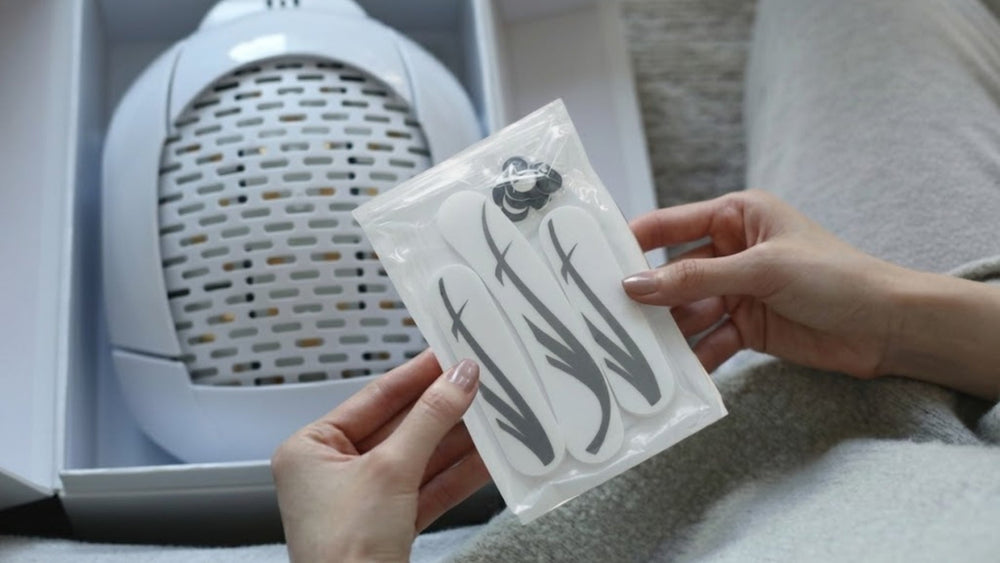
Theradome is a wearable, FDA-cleared Laser Phototherapy device designed to deliver laser light to the scalp. FDA 510(k) records describe Theradome’s laser helmet as a low-level laser therapy device intended to promote hair growth in androgenic alopecia.
The difference is not “supplements bad, devices good.” That is too lazy. The real distinction is standardization. Saw palmetto products vary widely. A device category with FDA-cleared models and sham-controlled trials gives readers a different kind of evidence to compare.
Even when DHT is involved, follicle energy production and mitochondrial function still matter. This is one reason Laser Phototherapy is discussed separately from supplements, because LPT focuses on stimulating cellular energy and follicular activity rather than only hormone-related pathways.
Quick comparison table
|
Option |
Best fit |
Evidence level |
Main limitation |
Drug-free? |
Notes |
|
Saw palmetto |
Mild pattern thinning, DHT-focused supplement discussion |
Promising but limited human evidence |
Variable products, small studies, mixed formulas |
Yes |
Not a proven replacement for minoxidil or finasteride |
|
Minoxidil |
Early pattern hair loss in men or women |
Stronger clinical support and FDA-approved use for women’s FPHL |
Requires consistent use, scalp irritation can happen |
No |
May take 6 to 12 months to judge fairly |
|
Finasteride |
Male androgenetic alopecia, selected cases under medical care |
Strong prescription evidence |
Possible side effects, medical supervision needed |
No |
More potent DHT-pathway option than saw palmetto |
|
Laser Phototherapy |
Non-drug, scalp-targeted support for pattern hair loss |
Randomized sham-controlled device evidence |
Device quality and consistency matter |
Yes |
FDA-cleared home-use light/laser devices have meta-analysis support |
|
PRP |
Selected androgenetic alopecia cases under clinician care |
Growing evidence, variable protocols |
Cost, repeat sessions, technique variability |
Yes |
Better handled by dermatology clinics |
|
Microneedling |
Often studied as an add-on, especially with minoxidil |
Emerging, protocol-dependent |
Irritation and technique risk |
Yes |
Should be done carefully, preferably with clinical guidance |
Can You Combine Saw Palmetto With Other Hair-Loss Treatments?
Saw palmetto and minoxidil
Saw palmetto and minoxidil target different angles, so some people may consider using them in the same hair-loss plan. But the combination itself is not proven to be superior simply because it sounds strategic. If you are already using medication or have health concerns, check with a clinician before adding a hormone-active supplement.
More products do not automatically mean more progress. Sometimes it just means more bottles near the sink.
Saw palmetto and Laser Phototherapy
Saw palmetto is usually aimed at the DHT side of pattern thinning. Laser Phototherapy is a non-drug, scalp-targeted treatment category with evidence from randomized sham-controlled device studies. Those are different types of support, which is why the comparison is worth making.
For people who dislike prescription medications but also do not want to gamble everything on supplement blends, LPT may feel more concrete. You put the device on your head. The treatment reaches the scalp. No greasy routine. No “maybe this capsule contains the studied extract, maybe it doesn’t” nonsense.
Different category. Different level of control.
Saw palmetto and finasteride
Saw palmetto and finasteride both come up in the DHT conversation, so combining them is not something to do casually. It may be redundant for some people, and it may raise side-effect or interaction questions for others. A clinician should guide that decision.
Saw palmetto and hair supplements
Saw palmetto is often combined with biotin, zinc, pumpkin seed oil, marine extracts, collagen, or botanical blends. Sometimes that is thoughtful formulation. Sometimes it is label theater.
The problem is interpretation. If a multi-ingredient product helps, which ingredient helped? If it causes side effects, which one caused them? The more crowded the formula, the foggier the answer.
Who Might Consider Saw Palmetto for Hair Loss?
Better-fit
Saw palmetto may be worth discussing if you have confirmed or strongly suspected androgenetic alopecia, mild-to-moderate thinning, no pregnancy or breastfeeding concerns, no major medication conflicts, and realistic expectations. It may fit best as a cautious support option, especially for people who want to discuss non-prescription approaches.
You also need patience. If your plan depends on dramatic change in 30 days, saw palmetto is going to disappoint you like a cheap hotel hair dryer.
Poor-fit
Saw palmetto is a poor first move if your hair loss is sudden, patchy, painful, inflamed, scaly, linked to childbirth, linked to crash dieting, tied to illness, or possibly related to thyroid disease, iron deficiency, medication changes, or scalp disease.
It is also unrealistic for slick bald areas where follicles may no longer be active. Supplements do not resurrect long-gone follicles like a tiny herbal séance.
Look, if your hair loss looks gradual and pattern-based, saw palmetto may be a conversation. If it came on suddenly, hurts, flakes, burns, or arrived after a major body stressor, get the cause checked.
How to Choose a Saw Palmetto Product Without Getting Played
Look for transparency
Look for exact dosage, standardized extract details, clear manufacturer information, third-party testing, and specific ingredient amounts. A product that hides behind “proprietary blend” is asking you to trust a mystery scoop.
No thanks.
FDA says supplement manufacturers are responsible for evaluating safety and labeling before marketing, and FDA is generally not authorized to approve supplements for safety and effectiveness before they are sold.
Be careful with “DHT blocker complexes”
“DHT blocker complex” can mean many things. It may include saw palmetto, pumpkin seed oil, nettle, zinc, beta-sitosterol, pygeum, green tea, or a kitchen-sink list of botanicals. Some may be plausible. Some may be underdosed. Some may be included because they look impressive in a small black label box.
The issue is not that blends are automatically bad. The issue is that they are harder to evaluate. Research on one blend does not prove another blend. Research on a standardized oil does not prove a gummy.
Avoid overclaiming labels
Be skeptical of phrases like:
- “Regrows hair fast”
- “Stops baldness”
- “Natural finasteride”
- “No side effects”
- “Clinically proven hair regrowth”
- “Works for all hair types”
- “Blocks DHT completely”
If the claim sounds like it was written by someone trying to sell confidence by the ounce, slow down.
Listen, supplements are not FDA-approved before sale. FDA says it often does not know when new supplement products enter the market because premarket approval is not required. That does not mean every supplement is unsafe. It means the buyer has to do more scrutiny than most product pages encourage.
When Should You See a Dermatologist Instead?
See a dermatologist sooner if…
See a dermatologist if hair loss is sudden, patchy, painful, itchy, scaly, red, pustular, bleeding, scarring, or rapidly worsening. Also get checked if shedding began after childbirth, illness, surgery, major stress, a new medication, crash dieting, or symptoms that may suggest anemia or thyroid disease.
This is not meant to scare you. It is meant to save you from spending six months treating the wrong thing with impressive confidence.
What a dermatologist may check
A dermatologist may ask about your timeline, family history, medications, stressors, menstrual changes, diet, illness, scalp symptoms, and styling habits. They may examine the scalp and nails, do a hair-pull test, order blood tests, or perform a scalp biopsy if the diagnosis is unclear.
In women especially, a widening part can be female pattern hair loss, but it can also overlap with thyroid issues, iron deficiency, telogen effluvium, PCOS, or medication-related shedding. That is why guessing gets expensive.
Why early action matters
Androgenetic alopecia is easier to manage when follicles are still active but miniaturizing. Once thinning becomes advanced, treatment usually has less to work with. NCBI’s androgenetic alopecia review describes progressive follicle miniaturization as a defining part of the condition.
Early does not mean panic. It means do not wait until the bathroom light starts feeling like an enemy.
So, Is Saw Palmetto Worth Trying?
Saw palmetto may be worth considering if you have mild-to-moderate androgenetic alopecia, understand the evidence limits, and have no safety red flags. It is not a universal hair-growth solution, and it should not delay diagnosis or better-supported care.
For some people, it may be a reasonable add-on discussion. For others, it may be a very well-branded detour.
The difference comes down to diagnosis, expectations, safety, and whether you are using it as support or as a substitute for a real plan.
Where it fits in a sensible hair-loss plan
A sensible plan starts with identifying the type of hair loss. Then you match the treatment to the cause. For androgenetic alopecia, better-supported options include minoxidil, prescription 5-alpha-reductase inhibitors in appropriate candidates, FDA-cleared Laser Phototherapy devices, and clinic-based treatments like PRP or microneedling when suitable.
Saw palmetto can sit near the edge of that plan as a possible DHT-focused supplement. It should not sit in the driver’s seat while everything else waits in the driveway.
Where Theradome Fits
For people who want a non-drug route but feel uneasy betting on supplement blends, Laser Phototherapy is worth comparing separately. Theradome is a wearable FDA-cleared Laser Phototherapy device, and FDA records describe Theradome laser helmets as low-level laser therapy devices intended to promote hair growth in androgenic alopecia.
The point is not that saw palmetto is “bad.” It is that saw palmetto supplements vary, while a medical device gives a more standardized treatment method. And when you are already losing hair, standardization is not a boring word. It is the thing that keeps you from guessing forever.
Conclusion
Saw palmetto may help some people with androgenetic alopecia, but it is not a guaranteed hair-growth treatment and not a proven replacement for minoxidil, finasteride, or FDA-cleared Laser Phototherapy. The research is promising in spots, limited in others, and too variable to support dramatic claims. If your thinning is gradual and pattern-based, saw palmetto may be worth discussing with a clinician. If your shedding is sudden, patchy, painful, inflamed, or tied to a body stressor, diagnosis comes first.
The most honest version is this: saw palmetto has a plausible DHT-related theory, a long herbal-use background, and a few encouraging human signals. But it does not have enough consistent evidence to be treated like a proven standalone answer for hair loss.
Hair loss already makes people guess enough. Saw palmetto can be part of the conversation, sure. It just should not be the whole conversation.