







Minoxidil for hair growth does work for many people, especially those with androgenetic alopecia, but it usually works as a steadying treatment, not a grand reset. In plain English, it can help slow ongoing loss and improve density for some users, yet it does not reliably bring back a full head of hair, and any gains usually fade after you stop using it.
What is minoxidil, and why was it never meant for hair in the first place?
Minoxidil started life as a blood pressure medicine, not a hair product. Extra hair growth showed up as a side effect, and that side effect eventually led to topical minoxidil being developed for pattern hair loss. Mayo Clinic, and NIH resources all line up on that basic origin story.
Topical minoxidil is FDA-approved for certain kinds of hair loss, mainly male and female pattern hair loss. Oral minoxidil is a different animal. It is a prescription blood pressure drug, and when dermatologists use low-dose oral minoxidil for hair loss, that use is off-label.
That distinction matters.
Because once people hear “minoxidil,” they often lump the liquid, the foam, and the pill into one neat little basket. They are related, yes, but not interchangeable in the way internet chatter sometimes pretends they are.
How does minoxidil actually work on hair?
The part we know
Minoxidil seems to help hair partly by shifting follicles out of the resting phase and supporting a longer growth phase. Mayo Clinic says the exact mechanism is not fully known, while clinical and review literature consistently links minoxidil to earlier anagen re-entry and longer anagen duration in androgenetic alopecia.
Hair does not need a motivational speech. It needs follicles that are still capable of cycling, then a treatment that nudges those follicles toward staying active longer. Minoxidil can help with that in some people.
The part we do not fully know
Here is the honest bit, the slightly annoying bit too: no one can give you a perfectly tidy single-line mechanism and call the matter closed. Mayo Clinic is very direct that the exact way topical minoxidil works is not known, and reviews keep describing a mix of possible effects rather than one elegant master switch.
So no, the cleanest answer is not “it does one simple thing.”
It appears to affect hair cycling, follicle behavior, and growth-supporting pathways, but it is not a hormone blocker and it does not directly fix the underlying androgen sensitivity driving classic pattern loss. That is one reason why minoxidil can help without being a cure.
Why some people respond better than others
One of the more useful details, and one that does not get enough daylight, is sulfotransferase activity. Topical minoxidil needs to be converted into minoxidil sulfate in the scalp, and review literature suggests that people with higher follicular sulfotransferase activity may respond better than those with lower activity.
Which is a slightly maddening truth, really. Two people can use the same bottle, on the same schedule, and still get very different outcomes because biology is not especially interested in fairness.
How effective is minoxidil for hair growth, based on actual data?

The evidence base for topical minoxidil in pattern hair loss is real. This is not one of those flimsy hair-care claims resting on vibes and wishful lighting. The American Academy of Dermatology includes minoxidil among the treatments that can help early hair loss, stimulate growth, and prevent further loss, while Mayo Clinic says it can help many people regrow hair, slow loss, or both.
Still, “effective” needs adult supervision.
In pooled evidence summarized in a 2025 review, topical minoxidil improved hair density by roughly 21 hairs per square centimeter, while placebo groups improved by around 5 to 9 hairs per square centimeter over similar treatment windows. That is meaningful. It is also not the same thing as reversing years of loss.
AAD puts the ceiling plainly: minoxidil can help early hair loss, but it cannot regrow an entire head of hair. DailyMed says response cannot be predicted, not everyone responds, and no one will be able to grow back all their hair. Those two statements, together, give you the fairest reader-facing expectation line in the room.
For men, older randomized trials and later reviews support 5% topical minoxidil as more effective than weaker concentrations, though irritation can be more of a nuisance with stronger formulations. For women, AAD says 2% and 5% minoxidil products are approved, and minoxidil remains the most-recommended treatment for female pattern hair loss.
And then there is location.
The crown, or vertex, tends to be the area where minoxidil performs more convincingly than the frontal hairline. That pattern shows up in clinical trial design, product labeling history, and comparative oral-versus-topical data, where vertex outcomes often look stronger than frontal ones.
Also Read: Does Aminexil Work For Hair Loss?
What does “working” really look like?
For a lot of people, minoxidil “working” does not mean some dramatic, movie-ready before-and-after moment. It can mean less shedding. It can mean slower thinning. It can mean your scalp shows a little less in harsh bathroom lighting, which, to be fair, is where many private emotional breakdowns begin.
That is still progress.
The most accurate way to frame success is usually one or more of these: reduced ongoing loss, partial regrowth, thicker-feeling strands, or better density in thinning zones. AAD and Mayo both support that more restrained reading of treatment success.
This is also where a lot of disappointment gets born. Someone expects teenage density. Minoxidil delivers modest improvement and stabilization. The treatment did something, sometimes quite a bit, but the expectation was built on a fantasy rather than the evidence.
Is minoxidil effective for everyone?
Who it works best for
Minoxidil tends to make the most sense for people with androgenetic alopecia, especially when thinning is still in progress and the area is not completely slick and long inactive. AAD notes that treatment tends to work better when hair loss is caught early, and Mayo Clinic also points out that results are more likely in certain types of baldness rather than all hair loss broadly.
Who might be disappointed
People with sudden, patchy, painful, inflamed, postpartum, unexplained, or non-pattern hair loss should not assume minoxidil is the right move. DailyMed is very explicit here, and AAD makes the same broader point that diagnosis matters because hair can fall out for many reasons.
It is not just about “hair loss.” It is about which kind.
That sounds fussy until you realize how much bad self-treatment starts with the sentence, “Well… hair is falling out, so I bought something.”
Why it fails sometimes
Minoxidil can disappoint for several reasons: wrong diagnosis, advanced loss, low sulfotransferase activity, poor adherence, irritation that makes someone stop, or plain old mismatch between expected and realistic results. None of that means minoxidil is useless. It means hair loss treatment is messier than internet certainty would like.
How long does minoxidil take to work?
Minoxidil is not quick. If it is going to help, most people need months, not days. Mayo Clinic says hair growth usually shows up after several months. AAD says results usually take about 6 to 12 months. DailyMed says at least 4 months of regular use is often needed before regrowth is noticed, with best results sometimes taking longer.
So when someone says, “I used it for three weeks and nothing happened,” that is not a review of minoxidil so much as a review of impatience.
Fair. But still.
A practical timeline looks like this: the first couple of months can be awkward, sometimes with shedding, then early visible changes may start around month four or later, and a more honest verdict often needs six months or more.
Does minoxidil cause shedding at first?
Yes, it can.
AAD says that in women, a temporary increase in hair loss can happen during the first two to eight weeks. DailyMed says shedding can continue for up to two weeks when treatment begins and describes that as temporary, while advising medical review if it keeps going beyond that.
That early shed is one of the main reasons people panic and quit. Understandably. Hair finally gets your attention, you try to help, and then the sink looks worse. But temporary shedding does not automatically mean the treatment is harming you. It can reflect follicles shifting through the cycle.
Still, there is a line.
If the shedding is severe, prolonged, or paired with symptoms that do not fit the usual pattern, you stop improvising and get the diagnosis checked. Hair loss can mimic other hair loss. Annoying sentence, true sentence.
Learn more in our detailed article about hair loss due to minoxidil.
What happens if you stop using minoxidil?
The short version is not romantic: you usually lose the gains.
Mayo Clinic says any new growth lasts only as long as treatment continues, and hair loss begins again within a few months after stopping. DailyMed says newly regrown hair will probably be lost in three to four months after stopping. AAD says you have to keep using minoxidil every day if you want to maintain regrowth.
So minoxidil is better understood as a management treatment than a one-time fix. That does not make it weak. It just makes it honest.
Topical vs oral minoxidil, which is more effective?
Topical minoxidil
Topical minoxidil is the standard starting point for a reason. It has direct FDA approval for pattern hair loss, long real-world use, and a well-mapped side-effect profile that is usually local rather than systemic. The most common drawbacks are irritation, dryness, residue, and the daily ritual itself.
Oral minoxidil
Low-dose oral minoxidil is being used more often off-label in dermatology, partly because some patients hate topical application, stop because of scalp irritation, or simply do better with a pill. Reviews describe it as promising and often well tolerated, but it still lives in a doctor-guided lane, not the casual over-the-counter lane.
What are the side effects of minoxidil?
Common topical side effects
The big ones are scalp irritation, itching, dryness, scaling, and redness. AAD lists these directly, Mayo Clinic points to scalp irritation and unwanted adjacent hair growth, and DailyMed repeatedly warns that local irritation is among the most common complaints.
Sometimes the issue is not minoxidil itself so much as the formulation around it. DermNet notes that stronger solutions can irritate more, and DailyMed labels also flag alcohol-containing products as a source of burning or irritation in sensitive areas.
Less common but still relevant
Unwanted hair growth can happen on the face or nearby skin, especially if the product spreads beyond the scalp or is transferred by hands, pillowcases, or poor drying habits. DailyMed discusses this directly, and Mayo Clinic notes that adjacent facial or hand hair can appear in some users.
Oral-specific concerns
With oral minoxidil, the side effect pattern shifts. In the 2024 trial, the most common adverse effects in the oral group were hypertrichosis, meaning extra hair growth in places you did not invite it to appear, and headache. That trial described oral 5 mg as well tolerated overall, but it still sits in a more medically supervised category because the drug is systemic.
How should you use minoxidil if you want it to have a fair shot?
Use it exactly as directed, consistently, and on the scalp, not on wishful thinking. AAD says it is usually applied once or twice daily depending on the product. DailyMed says more frequent use or larger doses do not make it work faster or better and may raise side-effect risk.
Missed a dose? Fine, just continue with the next one. DailyMed specifically says not to double up to compensate for missed applications.
And yes, dry scalp helps. Mayo Clinic and DailyMed both advise scalp application in a way that keeps the product on the scalp long enough to do its job, with DailyMed saying it should remain on for about four hours before washing for best effect.
If a treatment becomes so annoying that you quietly stop after six weeks, then its theoretical efficacy is not your problem anymore. Adherence is.
Can you make minoxidil work better?
Microneedling
Possibly, yes. Meta-analyses and newer reviews suggest that microneedling combined with topical minoxidil can improve hair-growth outcomes more than minoxidil alone in androgenetic alopecia, though protocols still vary and the literature is not perfectly standardized.
That makes microneedling one of the more credible add-ons, not because it is fashionable, but because it has actual comparative evidence behind it.
Laser Phototherapy
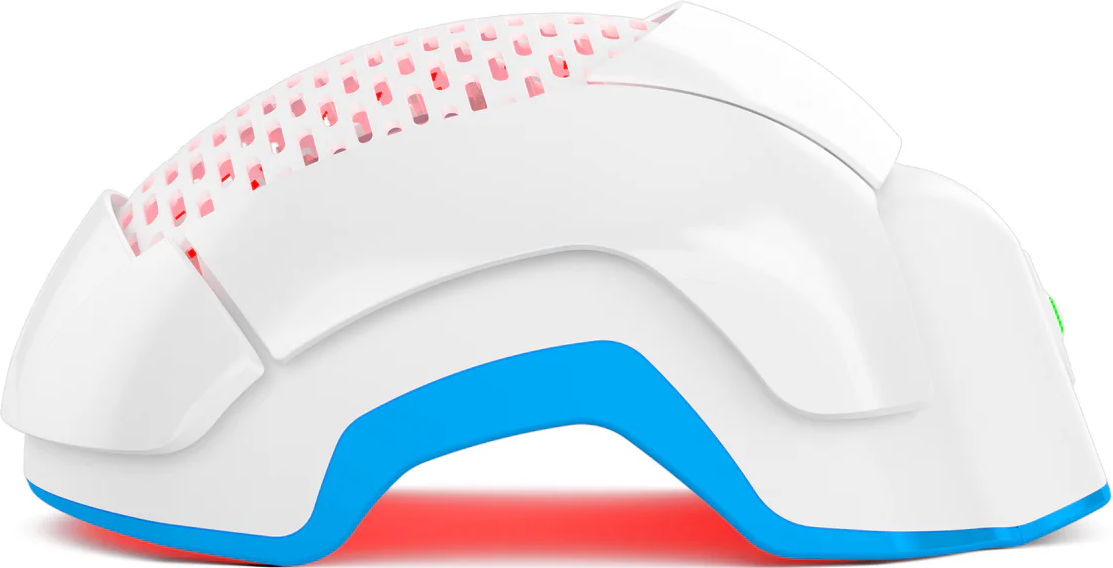
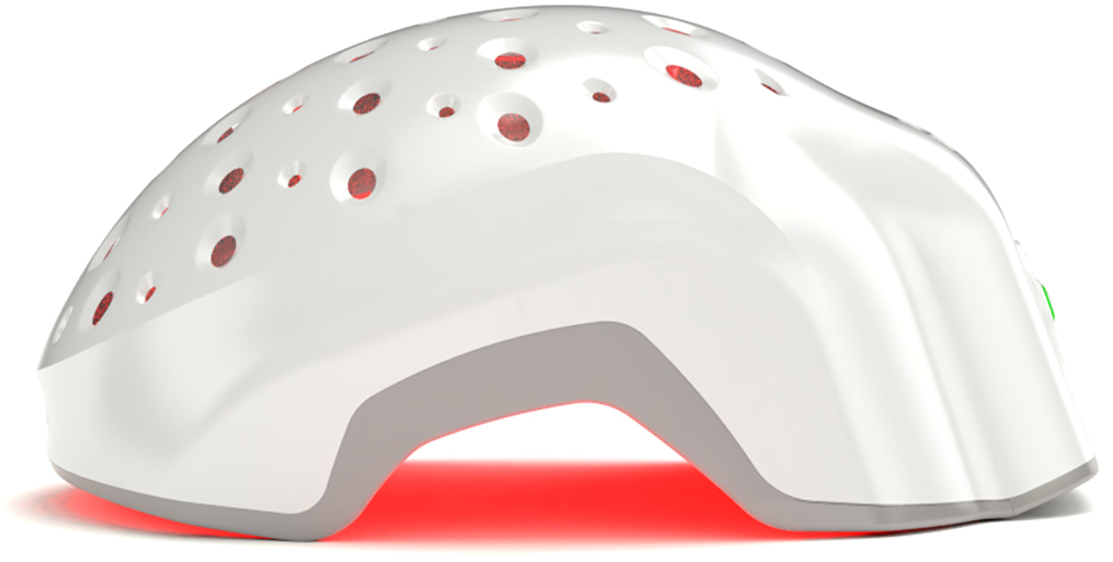
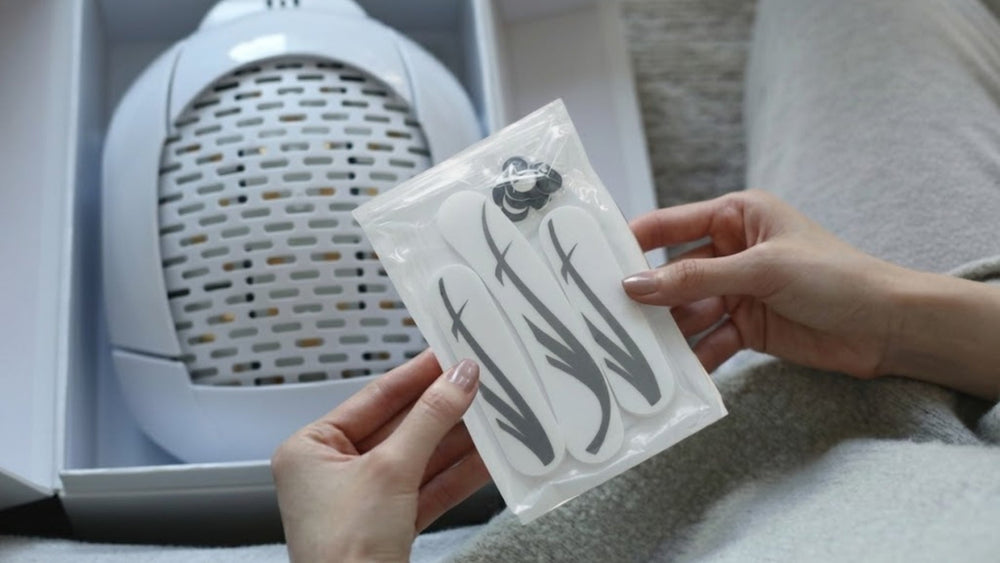
Laser Phototherapy sits in a slightly different lane from minoxidil. Not necessarily “better” in every case… but different in a way that matters once you look a bit closer.
Minoxidil tends to show its strongest results around the crown. That’s not an accident. A lot of the earlier clinical focus and measurable density gains have historically centered there, which means outcomes at the frontal scalp or hairline can be less predictable. Some people do see improvement in those areas, yes… but it’s rarely as consistent.
Laser Phototherapy approaches the problem from a broader angle.
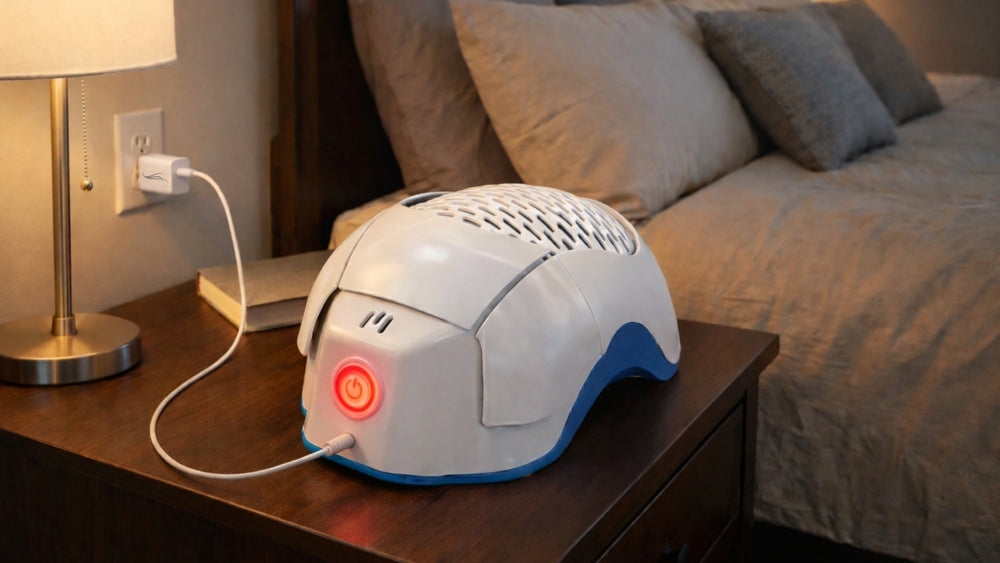
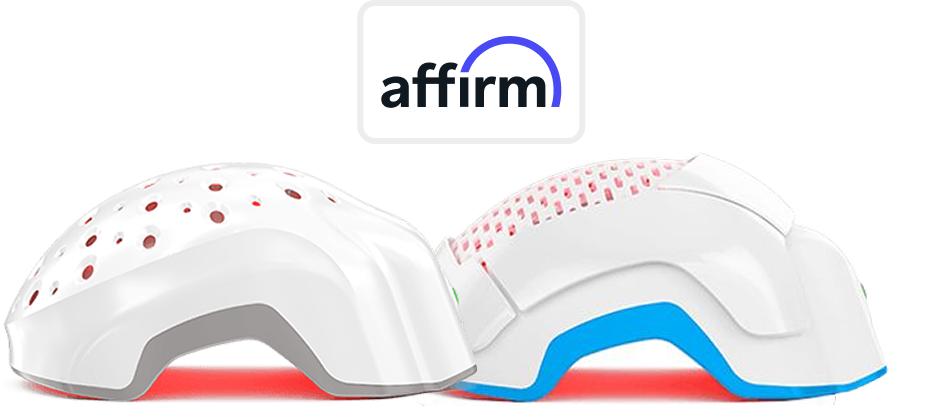
Instead of relying on a topical drug sitting on the scalp, it uses low-level laser light to stimulate follicular activity across the entire scalp surface. Not just one region. The idea is not to “force” regrowth in a specific spot, but to support the overall behavior of follicles in a more uniform way. (And that distinction… subtle as it sounds… tends to matter over time.)
There’s also the question of routine.
Minoxidil usually asks for daily, ongoing use. Miss it often enough, or stop entirely, and whatever progress was made tends to fade. That maintenance loop can be manageable for some people… and quietly exhausting for others.
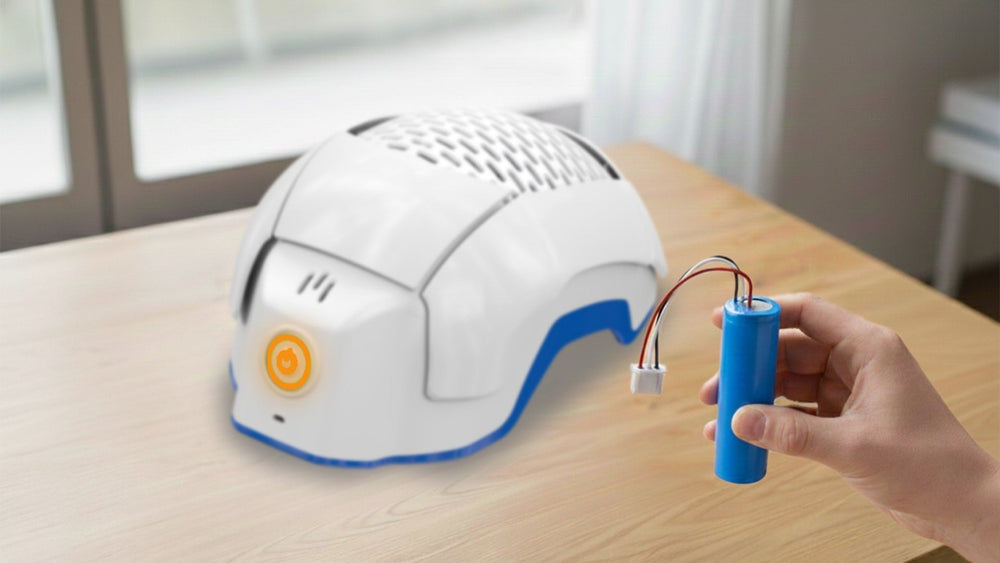
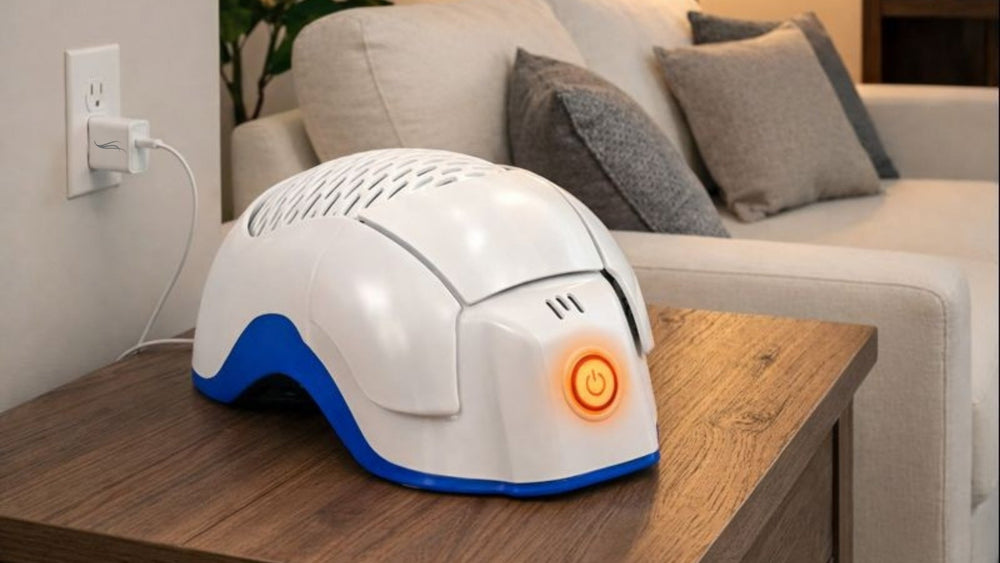
Laser Phototherapy, by contrast, is typically used a few times per week in shorter sessions. Once a response is established, many people shift into a maintenance rhythm rather than a strict daily dependence. It’s not “set and forget”… but it does tend to feel less tied to the day-to-day.
And then there’s practicality.
Topical minoxidil can be a little messy. Liquid formulations can run, foam can leave residue, and in some cases, product can spread beyond the scalp and lead to unwanted hair growth on nearby skin. None of this is universal… but it comes up often enough to be worth mentioning.
Laser devices avoid most of that. No liquid, no residue, no transfer to unintended areas. You use it, you’re done, and you move on with your day.
Side effect profiles reflect that difference too.
Minoxidil is generally safe, but it can cause irritation, itching, and initial shedding. Oral forms carry additional systemic considerations. Laser Phototherapy, particularly with low-level “cold” lasers, is associated with minimal side effects in most users, usually limited to mild scalp sensations that settle quickly.
So the comparison is less about which one “wins”…
…and more about what kind of trade-off you’re comfortable with.
If you want something simple, accessible, and clinically established, minoxidil makes sense.
If you’re thinking longer-term, full-scalp support, or you’ve found yourself struggling with consistency or irritation, Laser Phototherapy starts to look a bit more compelling.
Not as a replacement in every case.
But not just an afterthought either.
Combination therapy more broadly
In men, minoxidil plus finasteride often performs better than minoxidil alone because the two address different parts of the problem. Topical minoxidil helps support growth, while finasteride lowers DHT activity, which is a key driver in male pattern hair loss.
That said, combinations should be built around the actual diagnosis, tolerance, and goals of the patient, not around some internet fantasy roster of twelve products and a red LED cap bought at 2:14 a.m.
So, is minoxidil actually worth it?
For many people with pattern hair loss, yes.
It is one of the few treatments with durable mainstream dermatology support, over-the-counter access in topical form, and enough long-run clinical use to speak about it without sounding like a gambler with a ring light.
But “worth it” depends on what you are asking it to do.
If you want gradual help with thinning, some regrowth, and slower worsening, minoxidil can be worth the routine. If you want instant density, permanent results after a brief fling, or guaranteed temple resurrection, it will probably annoy you.
Where does minoxidil fit in the bigger picture of hair loss treatment?
Minoxidil is not the whole plan. It is often one part of a larger hair-loss strategy that begins with identifying the cause, then matching treatment to that cause. AAD keeps coming back to that point, and for good reason. The earlier the correct cause is found, the better the odds of a better outcome.
Which brings us back to something from earlier, the part about not treating “hair falling out” as one single thing. That shortcut causes a lot of wasted time. And wasted hope, frankly.
For androgenetic alopecia, minoxidil has a legitimate place. So do other options, depending on sex, stage, tolerance, and treatment goals. The point is not to worship one ingredient. It is to use the right tools for the right scalp.
Conclusion
Minoxidil for hair growth is neither a scam nor a miracle. It is a real, evidence-based treatment for pattern hair loss that can help many people slow shedding and improve density, especially when started early and used consistently. It also has limits, and those limits matter. The most sensible way to use it is inside a proper diagnosis, with realistic expectations, enough patience to judge it fairly, and a willingness to think beyond one bottle if your scalp needs a broader plan.