





Usually, yes... at least in ordinary hair-loss conversation. But if we tighten the language a bit, Laser Phototherapy is the laser-specific phrasing, while Low-Level Light Therapy is the older, broader label that has often been used for low-power therapeutic light more generally. In newer medical literature, the umbrella term has increasingly shifted toward photobiomodulation, partly because not every effective device uses a laser and partly because nobody ever agreed on what “low-level” really meant.
One awkward truth sits underneath all of this. People think they are asking a vocabulary question. They usually are not. They are also asking whether the device uses lasers or LEDs, whether it delivers enough energy to matter, whether the target is the follicle rather than just the surface, and whether the evidence behind the device category is actually decent. Fair questions, honestly.
Why the Terminology Around Hair-Growth Light Therapy Confuses So Many People
The naming in this field got cluttered years ago and never fully sorted itself out. Older papers say LLLT. Some brands say laser therapy. Some say light therapy. Some say cold laser. And newer reviews increasingly say photobiomodulation because the biology is not confined to one old phrase and the effects are not limited to coherent laser sources alone.
So... are all these sources arguing with one another? Not really.
They are often describing the same therapeutic family from different angles. LLLT is the older label. LPT is more exact when the treatment specifically uses lasers. Photobiomodulation is the broader modern umbrella. Once that clicks, the alphabet soup looks less mysterious and more like a field that kept renaming itself while the hardware kept changing underneath it.
And that matters for readers because the broader the term gets, the less it tells you about the actual device. “Light therapy” can cover machines with very different optics, very different dose characteristics, and very different evidence trails. Same family, yes. Same delivery physics, not necessarily.
Find out the differences between the common light therapies i.e. LPT, LLLT and LED used in hair growth treatment.
What Is Low-Level Light Therapy (LLLT)?
Low-Level Light Therapy refers to the therapeutic use of low-intensity, non-thermal red or near-infrared light to affect biological tissue. Historically, the term helped separate these devices from surgical lasers that cut, coagulate, or heat tissue. In other words, the whole category was built around light that works by signaling and modulation rather than by burning or ablating.
That older terminology stuck, especially in hair-loss research. Reviews on androgenetic alopecia still use LLLT heavily, and several randomized scalp-treatment trials are titled that way. The therapeutic wavelengths discussed in PBM reviews typically sit in the red and near-infrared range, because those wavelengths have tissue interactions that can be biologically useful without acting like destructive surgical lasers.
But the term has a genuine limitation. It can be too broad. “Low-level” is imprecise, and LLLT has been used in ways that can sweep together laser-only devices, LED devices, and mixed systems. That is one reason the field moved toward photobiomodulation. The shift was partly about scientific accuracy and partly about getting away from terminology that had started to blur too many unlike things together.
What Is Laser Phototherapy (LPT)?
Laser Phototherapy is the narrower phrase. It refers to phototherapy delivered with lasers, not just any light source. So if a device uses laser diodes to deliver therapeutic red light to the scalp, calling that treatment LPT is more precise than calling it generic light therapy. That precision is the useful part. It tells you something about the source, not just the intent.
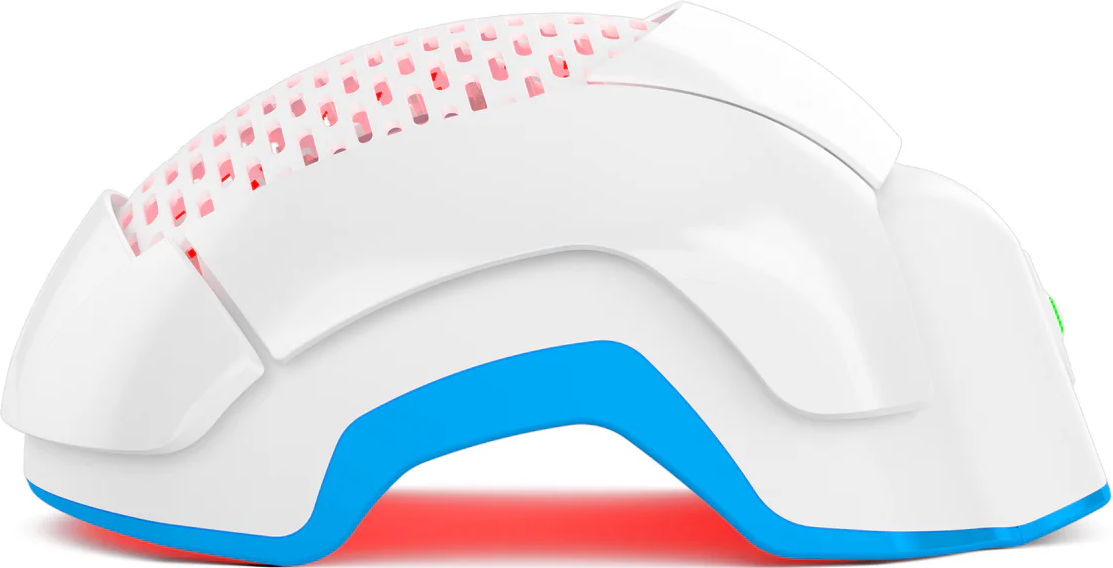
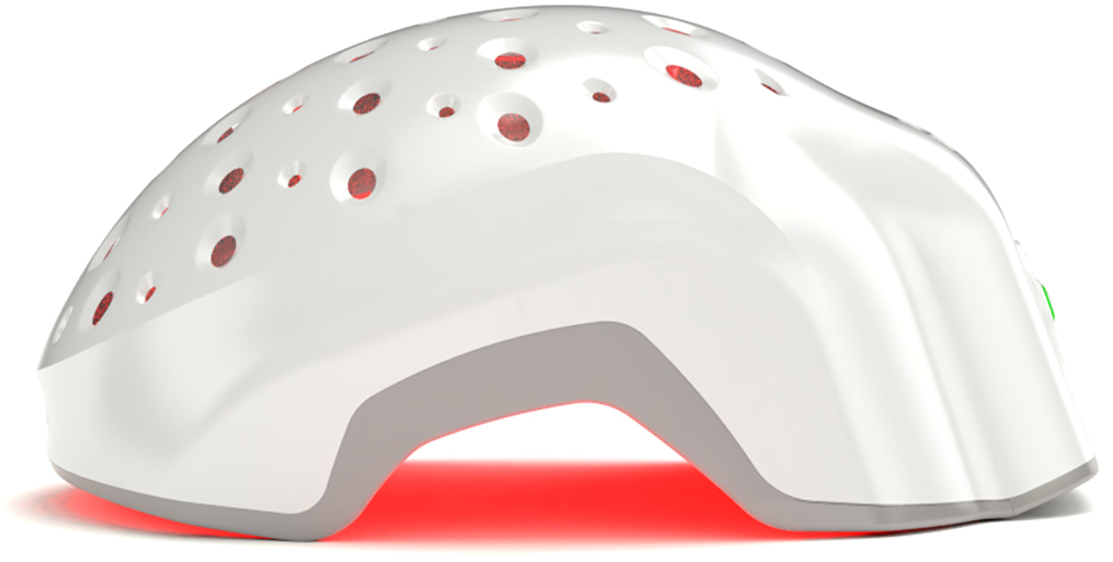
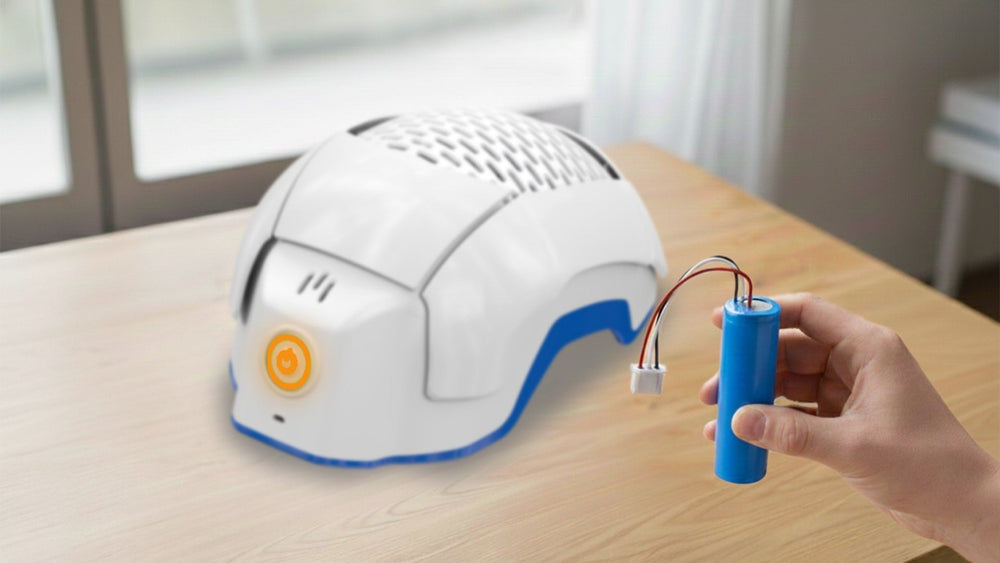
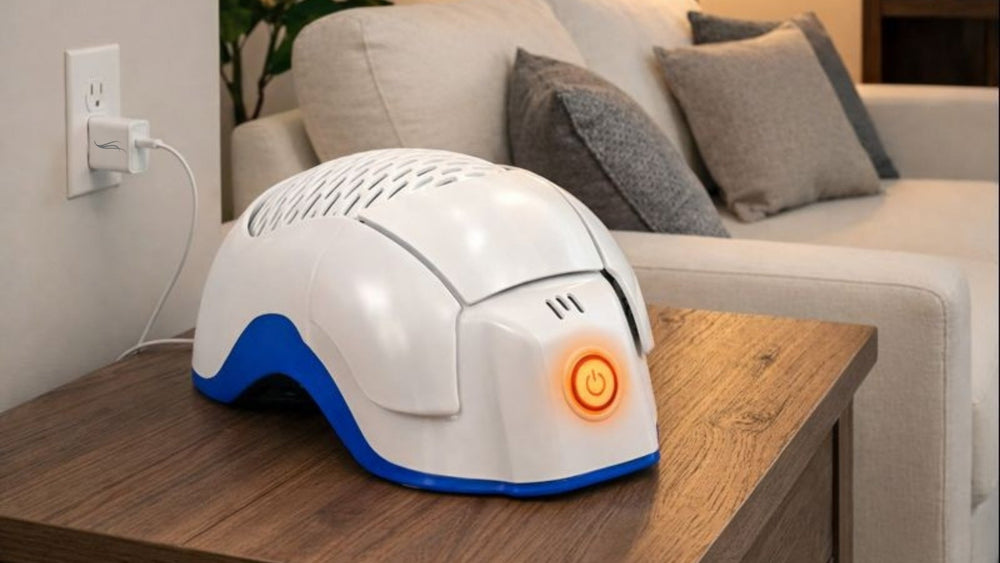
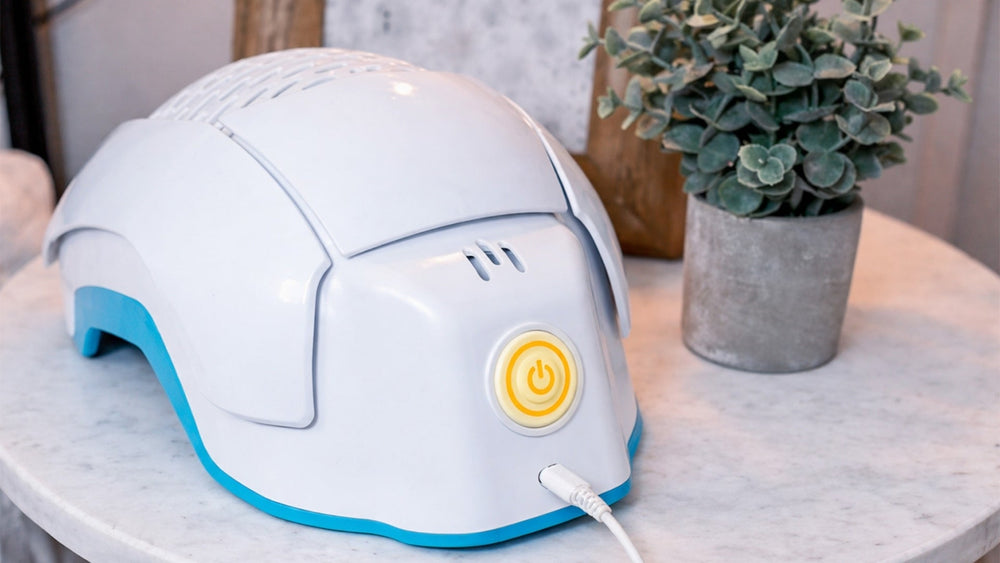
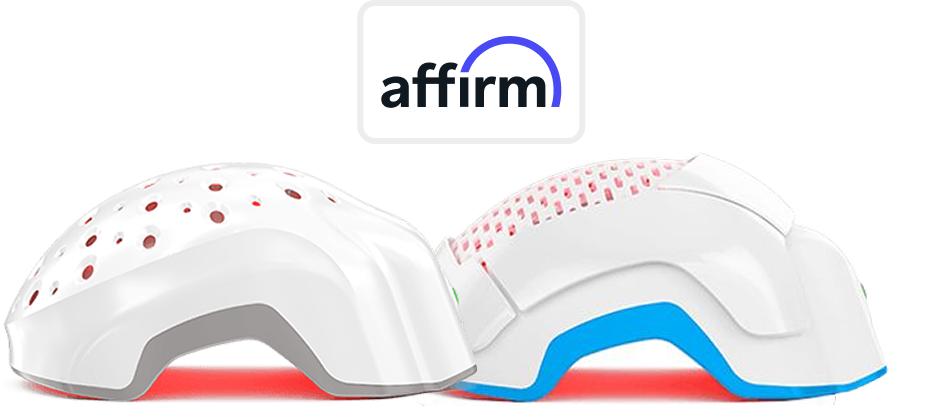
That distinction matters in hair loss because “light-based device” can mean very different hardware. Some FDA-cleared systems are comb-style laser devices. Some are helmet-type systems. Some combine laser diodes with LEDs. Once you look at FDA device summaries, you can see pretty quickly that the category is not one tidy object. It is a grouping of related, but not identical, delivery systems.
So the clearest phrasing is this: all LPT sits inside the larger therapeutic-light category, but not every device discussed under older LLLT language is strictly laser-only. That is the hinge point your team lead is nudging you toward. The difference is not just terminology. It is what the light source is actually doing.
LPT vs LLLT: The Technical Difference Most Articles Skip

This is where the article needs more backbone. Not more noise. More backbone.
The GiB section your lead pointed to is strong because it moves the discussion away from mere naming and toward delivery precision. That is the useful move. Once the question becomes “How does the energy actually reach the follicle?” the whole debate gets sharper.
A practical way to think about it is this: a well-targeted laser system behaves a bit like a delivery route with direction and concentration, while more diffuse light behaves more like a broader surface application. It is only an analogy, of course... but a good one. And it helps explain why three variables keep showing up in serious discussions of hair devices: coherence, wavelength, and energy density.
Coherent vs Incoherent Light
Laser light is typically coherent, while LED light is noncoherent. Lasers are also generally more monochromatic, while LEDs usually have a broader bandwidth. That does not mean coherence is the only thing that matters. In fact, reviews on PBM note that coherence alone does not fully explain therapeutic outcomes, and that LEDs can produce biological effects too. Still, coherence changes the optical behavior of the beam, which is one reason lasers and LEDs are not simply interchangeable by default.
So the careful conclusion is not “laser good, LED useless.” That would be lazy. The careful conclusion is that lasers and LEDs deliver light differently, and once the target is several millimeters below the scalp surface, those delivery differences start to matter more, not less.
Light Penetration and Tissue Interaction
Hair follicles are not painted on top of the skin. The biologically active part of the follicle sits below the surface, and the question is not merely whether a device emits red light, but whether that light reaches relevant tissue with meaningful dose still intact. PBM reviews repeatedly stress that tissue response depends on parameters, including wavelength, power, dose, and delivery design.
This is the part many thin articles skip. Two devices can both claim “light therapy” and still interact with tissue quite differently. One may deliver light in a more concentrated way. Another may spread light over a wider area with less optical direction. One may still be useful. Another may be underpowered for the target it is trying to reach. Same category. Different practical consequences.
Wavelength Precision
Wavelength is not a decorative spec. It is one of the main determinants of how light behaves in tissue and which chromophores absorb it. Modern PBM reviews describe therapeutic use mainly in the red range around 620 to 700 nm and the near-infrared range around 700 to 1440 nm. Hair-growth devices cleared by the FDA often cluster around the red range, with many comb-style devices documented at 650 nm ±10 nm.
That does not mean one single number is a magic hair code. It does mean wavelength choice is part of the engineering logic. The GiB material puts heavy emphasis on 680 nm. The more defensible way to say this in a YMYL article is that hair-growth laser systems are commonly engineered around specific red wavelengths rather than vague “red light” in general, because parameter precision matters to tissue response.
Energy Delivery and Dosimetry
Here is the real fulcrum. Dosimetry.
PBM effects are parameter-dependent, and more light is not automatically better. Reviews describe the field as one in which treatment outcome depends on wavelength, irradiance, fluence, timing, and schedule. There is a therapeutic window, and that is why device design cannot be brushed off as a cosmetic detail. It is the treatment architecture.
This is where the syringe analogy from GiB earns its keep. Wavelength is a little like the medicine itself. Energy density is a little like the dosage. And the optical behavior of the beam is a little like the delivery route. Get one wrong and the whole system weakens. Get all three aligned and you have something that is at least built on rational therapeutic logic. Not guaranteed success... but rational logic.
Why Device Engineering Matters
Scalp coverage matters. Diode arrangement matters. Treatment frequency matters. Consistency matters too, because a device cannot help much if it lives in a drawer after the first two hopeful weeks. FDA-cleared systems show meaningful differences in diode count, form factor, treatment time, and intended use. This is not one plug-and-play object wearing different hats. It is a cluster of device designs with distinct engineering choices.
And yes, that does bring us back to the start. Same family. Not always the same label. Also not always the same machinery.
How Light Therapy Actually Interacts With Hair Follicles
Hair growth is not a light switch. More like a slow biological negotiation.
Photobiomodulation Explained Simply
The leading mechanistic explanation is that red or near-infrared photons are absorbed by endogenous chromophores, especially mitochondrial cytochrome c oxidase, which then influences ATP production, reactive oxygen species, calcium signaling, and downstream transcription pathways. That is the modern review-level language for how PBM can alter cellular behavior without thermal injury.
In hair follicles, the working theory is that these signaling effects can support follicular activity and may help shift more follicles into or within the anagen growth state. Hair-loss reviews describe PBM as potentially stimulating anagen re-entry, prolonging anagen duration, and supporting proliferation in active follicles, while also noting that the precise pathway map is not finished. We know more than we used to. We do not know every last thing. That is the honest middle.
Hair Follicle Biology and Miniaturization
In androgenetic alopecia, follicles gradually miniaturize. With repeated cycles, the anagen phase shortens, the fiber becomes finer, and robust terminal hairs slowly give way to smaller, thinner shafts. This is why pattern hair loss tends to look progressive rather than abrupt in most people.
That context matters because the strongest evidence for light-based therapy sits in pattern hair loss, not in every shedding condition that can happen on a human scalp. AGA is the main lane here. Once you push too far into other causes, the certainty softens.
Why Treatment Takes Months
Scalp follicles cycle through anagen, catagen, and telogen, and those phases do not care about anyone’s impatience. Most scalp hairs are in anagen at any given time, catagen is brief, and telogen lasts for months. So even when a follicle responds biologically, visible change still takes time to emerge.
That is why hair-growth trials usually run around 16 to 26 weeks rather than a handful of sessions. The timeline is not a marketing inconvenience. It is basic follicle biology. And frankly, any device promising dramatic instant regrowth deserves a very skeptical eyebrow. Maybe two.
What Clinical Research Says About Light Therapy for Hair Loss
Here is the compact version with the useful edges left intact.
Randomized Clinical Trials
A 24-week, randomized, double-blind, sham-controlled multicenter trial found that the LLLT group had significantly greater hair density than the sham group, along with significantly better mean hair diameter, and no serious adverse reactions were detected. That is one of the more cited modern trials for AGA in this space.
A second 24-week, randomized, double-blind, sham device-controlled trial in Thai men and women with androgenetic alopecia also found the active helmet-type device superior to sham for increasing hair density and hair diameter, with temporary shedding and scalp pruritus reported as side effects.
A 16-week multicenter, randomized, double-blind, sham-controlled study of a helmet-type device likewise reported efficacy and safety in AGA. So the signal is not hanging on one trial alone. There are multiple controlled studies pointing in the same general direction.
Systematic Reviews and Meta-Analyses
A 2021 systematic review and meta-analysis of randomized controlled trials involving FDA-cleared home-use devices concluded that LLLT is potentially effective for pattern hair loss, while still calling for longer-term follow-up and stronger comparisons between devices and energy sources. That is measured language, but it is not weak language. It is supportive with its shoes still on.
Hair-loss reviews and broader PBM reviews support the same general picture. The category has credible evidence in androgenetic alopecia, especially for increased hair density, but the literature remains heterogeneous in terms of devices, schedules, and optical parameters. That is why one should be positive without becoming sloppy.
What the Evidence Still Cannot Answer
The literature does not justify saying all devices are equivalent. It does not justify saying every red-light gadget on the market works the same. And it definitely does not justify acting as though terminology alone tells you whether a device will perform well. Parameter differences matter. Device design matters. Trial quality matters.
There is also a limit to how hard we can push the “laser versus LED” argument from current independent literature. Some reviews note that LEDs can produce PBM effects, especially in superficial tissue, while deeper-target applications may favor lasers in some settings. So the defensible claim is not “LEDs do nothing.” It is that source, depth target, and engineering profile matter, and broad labels hide those distinctions.
Are LPT Devices Safe?
In the hair-loss setting, the category has a generally favorable safety profile. The major randomized trials reported no serious adverse reactions or no serious adverse events, while some studies noted milder issues such as temporary shedding or scalp itch.
FDA-cleared comb summaries document visible red laser diodes at 650 nm ±10 nm with per-diode output below 5 mW, and classify the systems as Class 3R under IEC 60825-1. FDA-cleared stationary clinical systems cited in later summaries also describe 650 nm laser modules with output below 5 mW and Class 3R classification.
That does not mean people should be careless. “Safe” still means used as directed. Eyes are not the target tissue here, and sensible laser precautions still apply. But in clinical hair-growth use, these are not surgical, tissue-cutting systems. They are designed for non-thermal photobiomodulatory delivery.
How to Evaluate Light-Based Hair Devices
This is where the naming question turns into a practical question.
Light Source
Check whether the device uses laser diodes, LEDs, or a combination. If a brand says Laser Phototherapy, the hardware should actually contain lasers. That sounds obvious, but the old terminology clutter makes this worth saying out loud.
Wavelength
Look for a documented therapeutic wavelength rather than vague red-light language. FDA-cleared hair-growth devices commonly document wavelengths around 650 nm ±10 nm, and PBM reviews place therapeutic red light broadly within the red band rather than treating all visible red output as interchangeable.
Energy Delivery
Wavelength alone is not enough. Reviews on PBM repeatedly stress that dose delivery, irradiance, fluence, timing, and treatment schedule influence outcome. So a device should not merely emit red light. It should deliver light in a consistent, intentional, well-specified way.
Regulatory Clearance
For this niche, the right phrase is FDA-cleared, not FDA-approved. 510(k) documentation for hair-growth devices states that cleared devices are indicated to treat androgenetic alopecia and promote hair growth in defined populations after substantial-equivalence review. That regulatory footing matters because it is tied to intended use and safety controls, not just confident packaging language.
So… Are LPT and LLLT the Same Thing?
In casual hair-loss conversation, close enough, often yes. If someone asks whether a laser hair-growth helmet uses LLLT, the practical answer will often be yes. If they ask whether it is a form of Laser Phototherapy, also yes... provided it is actually using lasers.
But if we are being precise, LPT is the narrower laser-specific term, LLLT is the older broader term, and photobiomodulation is the cleaner modern umbrella in much of the literature. And once you layer in the GiB-style technical view, the issue becomes even clearer: the deeper difference is not merely what the therapy is called, but how coherence, wavelength, and delivered dose work together to reach the follicle. Same family. Not always the same delivery system.
Conclusion
So, LPT vs LLLT is not a fake question. It is just a slightly crooked one. The clearest answer is that they overlap heavily, but LPT is more specific to laser-based phototherapy, LLLT is the older broader label, and modern research increasingly leans on photobiomodulation.
For readers dealing with androgenetic alopecia, the smarter move is to look past the wording and check the real levers: light source, wavelength, dose delivery, scalp coverage, evidence quality, and FDA-cleared indication. That is where the serious differences live. And yes... that is less dramatic than marketing language. Much more useful, though.