GREAT VALUE

ALL-IN-ONE


GREAT VALUE
ALL-IN-ONE

Item added to your cart

Hair-removal lasers are engineered to heat and damage hair follicles by targeting melanin (pigment) so hair grows back much less. Laser Phototherapy (often called LLLT or “photobiomodulation”) is engineered to stimulate scalp tissue using low-power red/near-infrared light with the goal of supporting hair growth in conditions like androgenetic alopecia… without thermal destruction.
LASER stands for Light Amplification by Stimulated Emission of Radiation. In physics, “radiation” here means energy traveling as electromagnetic waves (not “radioactive”). This matters because people hear radiation and their brain does a horror-movie cutaway.
Hair-removal lasers are designed to reduce hair.
Laser Phototherapy is designed to support hair.
That sounds obvious. And yet… people still compare them like they’re the same tool with different marketing.
They’re not.
Laser hair reduction works by targeting melanin in the hair shaft/follicle with wavelengths commonly in the ~600–1200 nm range. Melanin absorbs that energy, converts it to heat, and that heat damages structures responsible for regrowth (done correctly, with the right settings).
Because melanin is also present in skin, epidermal melanin becomes “competing target,” which is why settings, wavelength choice, and cooling matter, especially in darker skin tones.
Photobiomodulation mechanisms discussed in the literature focus on cellular photoacceptors (often involving mitochondrial pathways like cytochrome c oxidase), with downstream signaling effects (ATP changes, redox signaling, nitric oxide interactions). Importantly, this is framed as non-ablative, non-heating at therapeutic doses.
Hair removal tries to injure the follicle selectively, LPT tries to nudge biology.
Common categories include ruby (694 nm), alexandrite (755 nm), diode (~810 nm), and Nd:YAG (1064 nm).
And yes, you’ll also hear about IPL (intense pulsed light). IPL isn’t a laser. It can still reduce hair, but it’s a different technology class and behaves differently in skin.
Because melanin absorption is the whole trick… and the whole risk.
Shorter wavelengths tend to be absorbed more by melanin (effective, but higher pigment risk in darker skin if settings are wrong).
Longer wavelengths (like 1064 nm Nd:YAG) penetrate deeper and generally interact differently with epidermal pigment, which is one reason they’re widely used for darker phototypes in clinical settings.
It’s the foundational idea behind many laser dermatology applications: use a wavelength and pulse duration that preferentially heats a target chromophore (here: melanin in hair) while limiting collateral damage.
(And yes, it’s a bit of an art. Settings are not “one size fits all.”)
Clinically, it’s usually described as long-term hair reduction rather than guaranteed permanent removal. Results depend on hair color, skin type, hormonal context, and treatment quality.
Commonly discussed risks include temporary redness/swelling and, less commonly, burns or pigment changes when parameters are poorly matched or after sun exposure. Safety guidance often emphasizes professional training and skin-type-appropriate device selection.
Published randomized sham-controlled trials show statistically significant improvements in hair measures vs sham over ~24–26 weeks, and systematic reviews/meta-analyses of FDA-cleared home-use devices report improved hair density compared with sham in included trials… with the usual caveats (device designs vary, protocols vary, long-term durability is less consistently studied).
Home-use hair-growth devices in the published literature often use red light in the 680 nm range, delivered via combs, caps, or helmets, with protocols that require repeated sessions weekly (or more).
Hair-removal lasers commonly run in ranges designed for melanin heating (again, ~600–1200 nm), while hair-growth light devices frequently emphasize red/NIR photobiomodulation ranges for signaling.
A widely cited hypothesis: photons are absorbed by cellular chromophores (including cytochrome c oxidase), shifting mitochondrial function and downstream signaling (ATP, ROS/redox signaling, nitric oxide interactions).
Do we have a single perfect mechanism that explains every device and every scalp? No. Biology doesn’t behave that neatly.
But the mechanism literature is not hand-wavy either. It’s fairly specific about plausible photoacceptors and pathways.
Safety depends on class, wavelength, exposure conditions, and design controls. In the US, FDA information on laser products describes hazard classes and stresses proper labeling and intended-use constraints.
For many consumer and alignment lasers, “low power” commonly clusters around definitions where visible continuous emissions are limited to milliwatt ranges in certain classes, and university safety manuals describe Class 3R visible CW limits around 5 mW.
But “low risk” is not the same as “do whatever you want.” Eyes are still eyes.
Hair-removal systems can be safe in trained hands, but by design they generate heat in target tissue. So the risk profile includes thermal injury and pigment-related effects, especially with inappropriate settings or recent sun exposure.
And if you’re wondering, yes, protective eyewear protocols exist for a reason.
|
Feature |
Hair Removal Lasers |
LPT / LLLT (Photobiomodulation) |
|
Primary goal |
Long-term hair reduction |
Support hair growth measures in pattern hair loss |
|
Main “target” |
Melanin in hair/follicle (heat-mediated) |
Cellular photoacceptors; mitochondrial signaling pathways |
|
Typical wavelength band (broadly) |
~600–1200 nm (varies by laser type) |
Often red/NIR ranges in PBM literature; many hair devices use red (~680 nm region) |
|
Tissue effect |
Intentional thermal injury to follicle structures |
Non-thermal biological signaling at therapeutic doses |
|
Who it works best for |
Darker hair pigment typically responds better; skin type affects selection and settings |
Pattern hair loss populations in studied trials; skin type doesn’t matter, but consistency matters. Expectations need to be realistic. |
|
Typical cadence |
Sessions spaced weeks apart, multiple treatments |
Repeated use multiple times/week over months in trials |
In general, hair-removal lasers are designed to damage follicles. LPT devices are designed to avoid thermal damage and instead deliver low-energy light for signaling.
So using a hair-removal laser on your scalp because you saw “laser” and thought “hair” is… not brave. It’s just mismatched engineering.
If you’re researching home-use medical-grade devices, the direction is usually the opposite: look for devices that are cleared and studied for promoting hair growth, not tools built to reduce hair.
Look for trials similar in design to:
Multicenter sham-controlled trial evidence in male/female pattern hair loss populations
24-week randomized sham-controlled helmet trial in androgenetic alopecia
If a brand says “clinically proven” but can’t point you to that level of study… pause.
A systematic review/meta-analysis specifically evaluated randomized controlled trials of FDA-cleared home-use low-level light/laser therapy devices for pattern hair loss. That kind of synthesis is helpful because it forces device claims to sit inside actual comparative data.
Many clearances and trials focus on androgenetic alopecia classifications and specify skin phototypes in indication language. Don’t ignore that fine print just because the helmet looks sleek.
Most controlled trials evaluate outcomes over months, commonly ~24–26 weeks. So if you’re expecting a two-week miracle, you’ll end up angry at physics.
(And yes, we’ve seen people quit at week 5 because “nothing happened.” Week 5 is basically the intro scene.)
Hair-removal lasers and Laser Phototherapy share one word, and that’s basically where the similarity ends. Hair removal relies on melanin-targeted heating to damage follicles for long-term reduction. Laser Phototherapy uses low-power light for non-thermal biological signaling, with randomized trials and a meta-analysis showing improvements vs sham in pattern hair loss over months. If you’re researching medical-grade home use, anchor yourself to FDA clearance documents, sham-controlled published studies, and a realistic timeline. Then be consistent. That’s the unsexy part… and it’s usually the part that decides your outcome.
No. Hair removal aims to heat and damage follicles via melanin absorption; photobiomodulation aims to influence cellular signaling at non-thermal doses.
Sham-controlled randomized trials and a systematic review/meta-analysis of FDA-cleared home-use devices support short-term improvements in hair density vs sham.
Look up the device’s FDA 510(k) summary and confirm the indications and device description match what’s being sold.
Because melanin is the target, and epidermal melanin can absorb energy too, increasing burn/pigment risks if wavelength and settings aren’t chosen carefully.
Evidence supports improvements in measured hair density/diameter vs sham in studied populations, mainly in the short-term windows studied. It does not promise a full restoration for every pattern, every severity, every hormonal context.
Home-use devices that are FDA-cleared include design controls and labeling expectations, and published trials generally report minimal adverse effects (temporary shedding/itching noted in some studies). Still, user selection, correct use, and eye-safety habits matter.
Laser hair removal is typically used on body/face regions for reduction. The concept of aiming those parameters at scalp hair is simply misaligned with the goal of keeping follicles healthy.
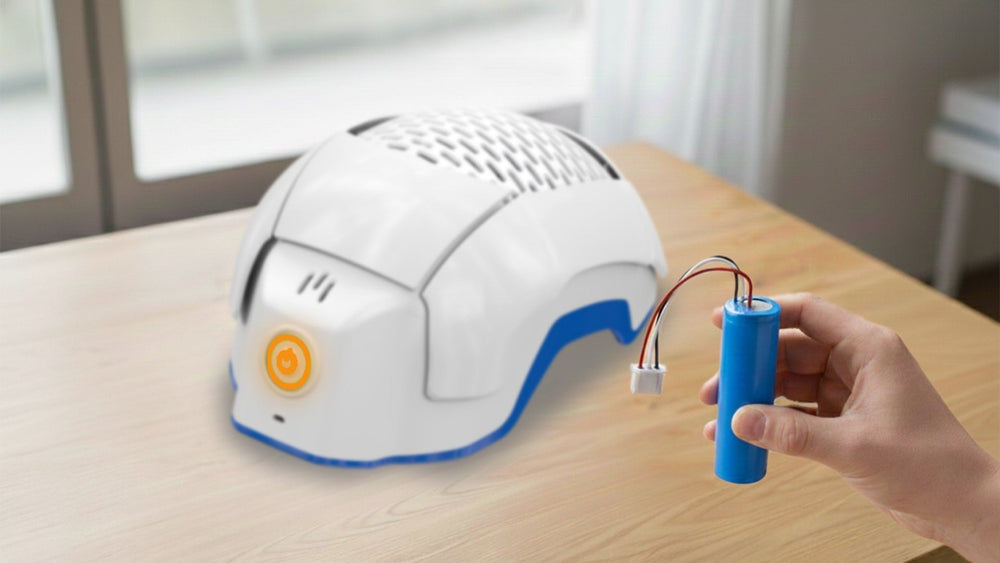
How To Replace Battery
What to do when you get a ‘Battery Low’ on your Theradome
Adjusting Helmet Sound on your Theradome
Getting out of System Pause on your Theradome
Best Way to Clean your Theradome
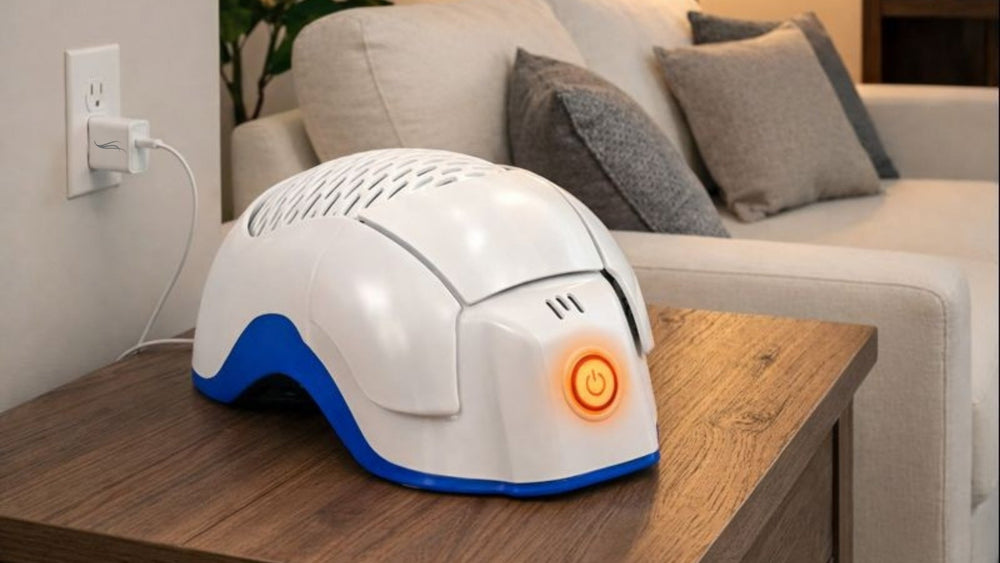
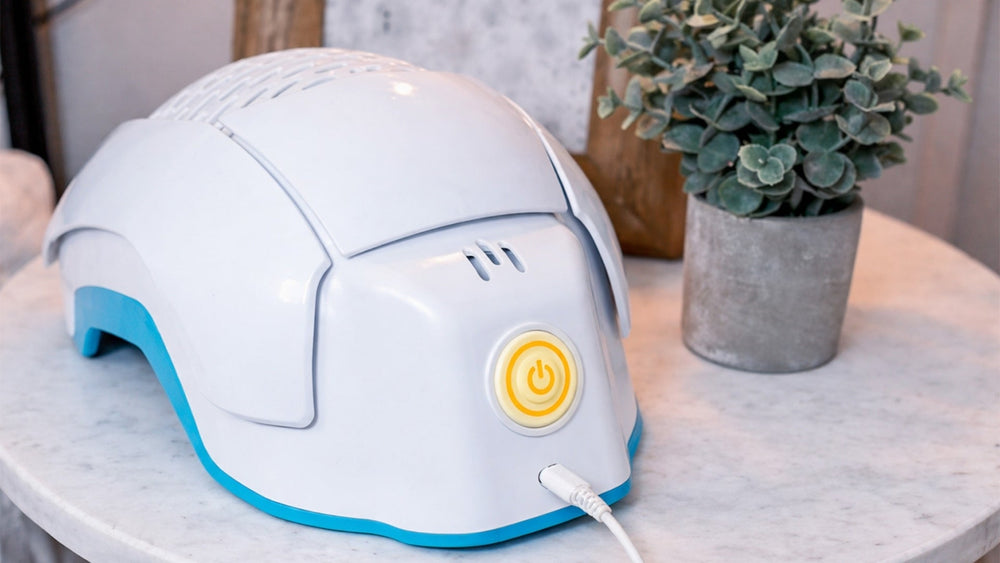
What To Do When Your Theradome Does Not Turn On or Charge
How To Register Your Theradome Manufacturer’s Warranty
How to Install Foam Pads on Your Theradome
What to do when you receive a Laser Error message on your Theradome
What to do when you receive a “System Error” message on your Theradome
What to do if the master switch is flashing red on your Theradome
What to do when you are getting a temperature error on your Theradome

Both FSA (Flexible Spending Account) and HSA (Health Savings Accounts) can be used to buy FDA-cleared medical devices, like a Theradome. If you have been diagnosed with Androgenetic Alopecia you should be able to use both a FSA/HSA accounts to purchase the Theradome. To check eligibility, review your employer’s benefits package or contact your HR department for FSA. For HSA, check your health plan details to ensure it qualifies as an HDHP and verify other eligibility criteria.
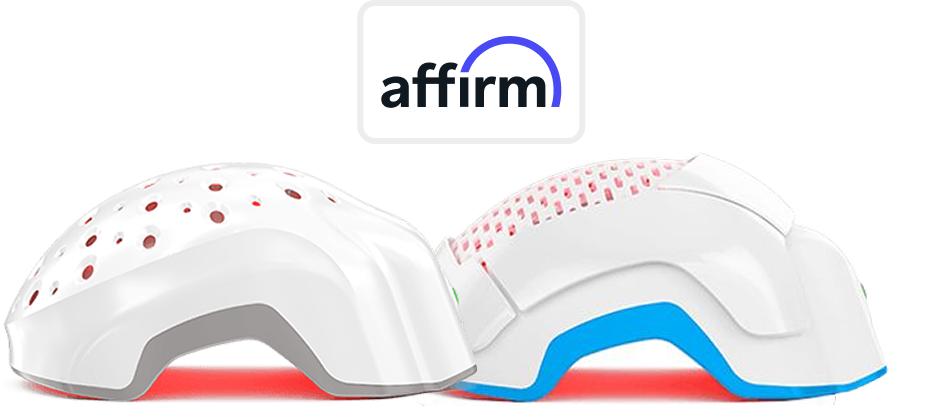
Make your Theradome purchase more manageable with our convenient Affirm financing methods.
How it works
Select Affirm at checkout to see your personalized payment options.

The Complete Hair Recovery System:


The Complete Hair Recovery System: