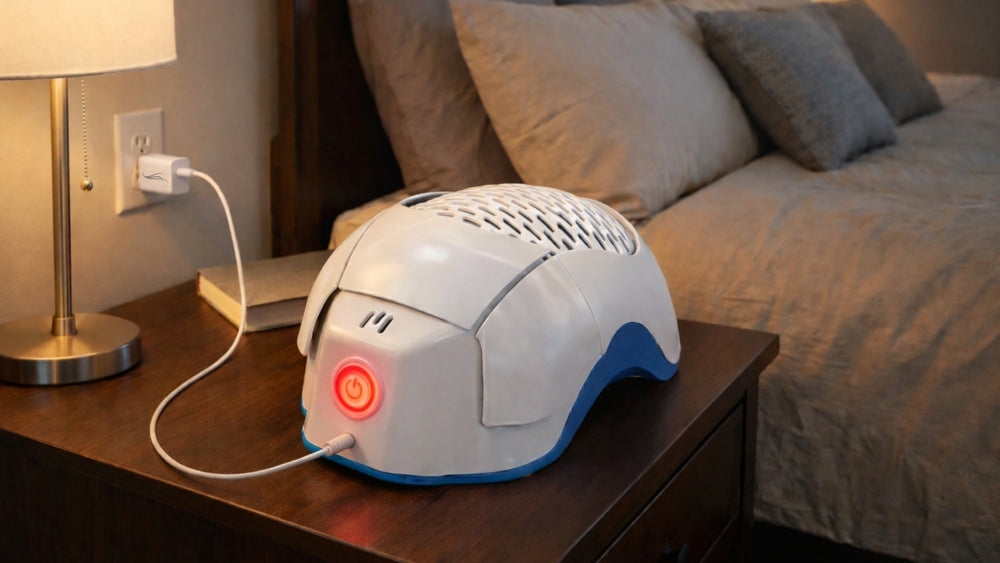
Looking for help?

Find answers to your questions

Is It Safe to Use LPT Device During Breastfeeding?

Mechanistically? Yes. But because clinical trials in lactating women are limited, Theradome recommends waiting until breastfeeding is complete. Here's why that matters, and what we do know.

Key Takeaways

  • LPT doesn't enter the bloodstream or alter breastmilk. It's topical, non-hormonal, and localized to the scalp.
  • No safety concerns have been documented in lactating women to date. But formal trials are lacking.
  • Theradome currently advises delaying use until breastfeeding is done — not due to risk, but to stay evidence-aligned.
  • Postpartum hair shedding is usually temporary. LPT is best considered if underlying androgenetic alopecia (AGA) is suspected.
  • Cold lasers (like Theradome) are FDA-cleared Class 3R devices, with power outputs under 5mW — meaning they don't burn, zap, or transfer systemically.

What Happens to Your Hair After Giving Birth?

Postpartum Hair Loss ≠ Hair Loss Disorder

Shedding after birth is a very normal biological response. During pregnancy, elevated estrogen levels keep most hairs in the growth (anagen) phase. After delivery, estrogen levels drop sharply. The result is… a bunch of those hairs shift into the resting (telogen) phase at once — and then fall out. This is called postpartum telogen effluvium.

It typically peaks 2 to 4 months after birth and slows down by 6 to 12 months.

Why Breastfeeding Isn’t to Blame

Some people associate the shedding with breastfeeding itself, but there’s no direct link. The shift is hormonal, triggered by estrogen decline — not by milk production. While prolactin and oxytocin levels do rise during lactation, they're not tied to hair follicle cycling in any proven way.

Is LPT Safe While Breastfeeding?

Laser Phototherapy is:

  • Non-invasive: No injections, no scalp trauma
  • Non-drug: Unlike minoxidil or finasteride, it doesn’t manipulate hormones
  • Non-thermal: It doesn’t heat tissue or burn
  • Non-systemic: It doesn’t enter the bloodstream

That last point is key when talking about safety during breastfeeding.

There are no published studies specifically testing LPT in breastfeeding populations. That said, multiple dermatology reviews and trichology guides note that LPT is safe in general due to its non-invasive nature.

The FDA classifies cold lasers like Theradome as Class 3R (<5mW output) — far less powerful than even your average lightbulb. They are not capable of penetrating to the bloodstream or affecting internal organs, including mammary glands.

Cold Laser = No Absorption, No Transfer

Because LPT is topical and light-based, there’s no active ingredient, drug, or molecule being absorbed. Nothing enters circulation, and nothing reaches breastmilk. LactMed (NIH) includes laser therapies among those "unlikely to affect breastfed infants".

So Why the "Wait" Guidance?

It’s simple: the absence of data doesn't mean the presence of danger. But in the medical world, especially for vulnerable populations (like pregnant or breastfeeding people), precaution is policy.

So while LPT appears mechanistically safe, Theradome's official stance remains: wait until breastfeeding is complete before starting treatment.

Who Should Be Cautious?

Temporary Scalp Conditions

If your scalp is inflamed, sunburned, infected, or otherwise compromised — hold off on LPT. The light might not penetrate effectively, and you want tissue calm and intact.

Photosensitivity & Rare Disorders

People with lupus, porphyria, or other conditions that increase light sensitivity should consult a medical professional before using any phototherapy device.

Taking Hormone-Affecting Medications?

If you're on meds that affect hormone levels postpartum (like thyroid medications or postpartum mood stabilizers), talk to your provider about how (and when) to best time hair restoration treatments.

Does LPT Even Work for Postpartum Hair Loss?

It Might — Depending on the Root Cause

If your shedding is purely postpartum telogen effluvium? It will likely resolve naturally. No intervention needed.

But if there’s underlying androgenetic alopecia (AGA) — which childbirth often "unmasks" due to hormonal shifts — then LPT becomes clinically relevant. AGA is a progressive condition that doesn’t self-correct, and LPT is one of the few FDA-cleared treatments available for women.

One study showed significant increases in terminal hair count in women with AGA after 16 weeks of LPT use.

When to Consider It

After shedding slows and you’re done breastfeeding, LPT may be worth considering if:

  • You notice widening parts, thinning temples, or slowed regrowth
  • You have a family history of pattern hair loss
  • Your scalp is healthy and clear

What About the Baby?

Will Laser Exposure Affect Them?

Nope. The light from LPT devices stays close to the scalp. There’s no scatter, no secondary exposure risk. The device light is in the visible red spectrum and doesn't radiate heat or particles.

Common sense still applies: don’t nurse during active treatment. Use it during naps or downtime, not with baby resting against your head.

Hygiene Matters

In postpartum months, scalps tend to sweat more. Hormonal shifts can trigger seborrheic flares. So: wipe your device clean after each session. Don't share devices unless fully sanitized. Keep the hair parted properly to allow light through dense or curly areas.

Should You Bother?

If you're in the thick of breastfeeding, sleep-deprived, and just trying to keep yourself and a tiny human alive... maybe not. No shame in waiting.

But if your shedding has gone on for months, regrowth is slow, and you suspect there’s something more than just postpartum shifts? Keep LPT in your back pocket.

It won’t fix everything overnight. It won’t stop postpartum shedding. But when used consistently (after breastfeeding ends), it can gently push follicles back into growth phase and stabilize miniaturization caused by AGA.

Sometimes, just having an action plan feels like progress.

Conclusion

Laser Phototherapy looks safe on paper for breastfeeding mothers. It doesn’t enter the bloodstream. It doesn’t affect milk. It’s non-hormonal, drug-free, and non-invasive.

But because the research isn’t quite there yet, Theradome recommends starting after you’ve finished breastfeeding. It’s not about risk — it’s about responsible timing.

If you're dealing with more than just temporary shedding, and you're ready to take control of hair health again — there’s a tool waiting when you're ready.

Frequently Asked Questions

Can I use Theradome while breastfeeding?

We advise waiting until breastfeeding is complete. Not because there’s evidence of harm, but because data is limited and our stance aligns with best-practice clinical safety.

Does LPT enter breastmilk?

No. It’s light-based and topical. There’s no systemic absorption or milk transfer.

Will it stop postpartum shedding?

No. That phase is hormonally triggered and self-limiting. But LPT may help support regrowth if AGA is present afterward.

Is LPT safer than Minoxidil during lactation?

Yes. Minoxidil is not generally recommended during breastfeeding due to limited safety data. LPT offers a drug-free alternative — but should still wait until lactation ends.

Do I need to part my hair for it to work?

Yes. Especially if your hair is dense or coily. The light must reach the scalp to stimulate follicles effectively.

View Our Products

Updated on 23 Dec 2025