
GREAT VALUE

ALL-IN-ONE


Item added to your cart
When you're researching hair regrowth treatments, you're not just looking for something that might work — you want to know what actually has the data to back it up. No influencers. No silver-bullet promises. Just the hard stuff: clinical trial design, real numbers, and whether it actually made a difference for real scalps in a controlled setting.
This blog breaks that down. It's everything the box doesn’t say, and more than most dermatology clinics have time to explain. But if you're someone who wants to understand what you're putting on your head and why it matters, this is where you'll find the science behind the lasers.
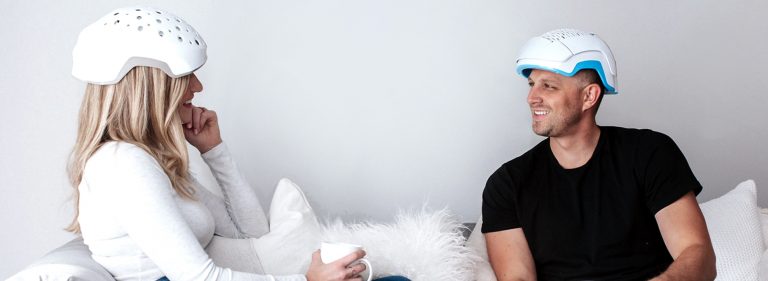
Laser Phototherapy (LPT) is a clinically recognized form of cold light therapy that uses non-thermal, low-powered lasers to stimulate cellular activity within hair follicles. The goal is to help sluggish follicles do their job better—by encouraging a shift from dormancy (telogen) into active growth (anagen).
One of the best laser phototherapy device for hair growth available in the market is Theradome. Theradome sought FDA clearance—and to get it, they had to prove the device actually helped hair regrow under controlled conditions. So they ran a gold-standard study to test just that.
The trial (NCT02528552) was a randomized, double-blind, sham-controlled study—conducted across four independent U.S. research centers and approved by an Institutional Review Board (IRB).
Participants: 49 men with Norwood II-IV androgenetic alopecia.
Groups:
Usage: Twice per week, 20 minutes per session, over 26 weeks.
Measurements were taken using HairCheck® assessments and standardized photographic evaluations.
Note: While the study was IRB-approved and submitted for FDA review, it has not yet been published in a peer-reviewed journal.
Total hair count:
Terminal hairs:
Vellus hairs:
Source: Theradome Clinical Trial Report (CR-PRC-001)
The clinical photo assessments and subjective survey results showed that treated users also saw improved hair shaft thickness and less visible scalp exposure—particularly those in early to moderate thinning stages.
No adverse effects were reported.
It's common to see shedding slow down first. Dormant follicles are transitioning. That's actually a good thing. It means the laser's cellular activation is prompting telogen hairs to exit and make way for new anagen growth.
Around the 3-month mark, many users start to see fine, soft hairs appearing—often near temples or the crown. Some call them "baby hairs," but clinically, they're new vellus-to-terminal conversions beginning.
This is where consistency pays off. Hairs thicken, shaft diameter improves, and coverage becomes more uniform. Clinical trial participants saw the best results by 6 months.
Some choose to continue beyond this for maintenance, especially in hormonally-driven cases.
No prescription. No in-clinic visits. Just science doing quiet work, two sessions a week.
LED devices scatter light. Laser devices deliver it in a coherent, focused beam that penetrates deeper.
The sham devices in Theradome’s trial were LED-based—and results flatlined. In contrast, laser users saw growth.
You can read about lasers vs leds for hair growth in details here.
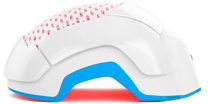
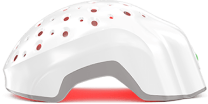
Theradome delivers 680nm red light using 80 laser diodes across a wide dome surface, offering uniform scalp exposure at a fixed optical distance.
That consistency matters—especially for reaching deeper follicles.
Laser Phototherapy isn’t a one-size-fits-all miracle. But it’s most effective for:
That said, thicker or tightly curled hair types (like Type 4B/4C) may require parting the hair during treatment for full light penetration.
And in cases of advanced miniaturization (where follicles are nearly inactive), results may take longer or require combination therapy.
The Theradome LH80 PRO uses Class 3R cold lasers. That means:
Compared to meds like finasteride (which can cause sexual side effects) or Minoxidil (which sometimes irritates the scalp), LPT's safety profile is unmatched for long-term use.
Laser phototherapy has also been used in physical therapy for years to reduce inflammation and promote healing.
Optional: Take monthly photos or use trichoscopy apps to track changes. Real improvement is often gradual.
Laser Phototherapy isn't about overnight fixes. It's about giving your follicles the conditions they need to function normally again—through consistent, targeted light exposure backed by real trial data.
Theradome's IRB-approved, sham-controlled clinical trial shows it works. Not by magic. Not by hype. But by measurable change in hair count and thickness over time.
If you're thinking about trying it, just know the data is there. The safety is real. The results are slow and steady—but steady matters more than fast when it comes to biological change.
Yes — when cleared by regulatory bodies (like the FDA), LPT devices such as Theradome are considered safe for repeated and long-term use. No studies to date show cumulative toxicity or adverse scalp effects with consistent usage patterns in compliant devices. Still, always follow usage guidelines or consult your provider.
You’ll likely see early signs — less shedding, baby hairs — around 3–4 months in. But significant visible thickening usually arrives after 6 months or more of consistent use. Results vary by baseline health, follicle status, and adherence. Think of it like a savings plan for your scalp: small deposits, compounded overtime.
In many cases, yes. Dermatologists often recommend pairing LPT with topical minoxidil, PRP, or nutritional therapy for a multi-modal approach. There’s growing clinical support for combination therapy — just avoid overlapping modalities (e.g. lasers and microneedling simultaneously) without guidance. Always check with your trichologist before stacking.
If follicles are completely scarred or miniaturized beyond function (common in long-term bald areas), lasers can’t resurrect them. But in early-to-mid-stage thinning, LPT often helps preserve density and reawaken dormant follicles. The earlier you start, the more likely your scalp responds.
How To Replace Battery
What to do when you get a ‘Battery Low’ on your Theradome
Adjusting Helmet Sound on your Theradome
Getting out of System Pause on your Theradome
Best Way to Clean your Theradome
What To Do When Your Theradome Does Not Turn On or Charge
How To Register Your Theradome Manufacturer’s Warranty
How to Install Foam Pads on Your Theradome
What to do when you receive a Laser Error message on your Theradome
What to do when you receive a “System Error” message on your Theradome
What to do if the master switch is flashing red on your Theradome
What to do when you are getting a temperature error on your Theradome

Both FSA (Flexible Spending Account) and HSA (Health Savings Accounts) can be used to buy FDA-cleared medical devices, like a Theradome. If you have been diagnosed with Androgenetic Alopecia you should be able to use both a FSA/HSA accounts to purchase the Theradome. To check eligibility, review your employer’s benefits package or contact your HR department for FSA. For HSA, check your health plan details to ensure it qualifies as an HDHP and verify other eligibility criteria.
Make your Theradome purchase more manageable with our convenient Affirm financing methods.
How it works
Select Affirm at checkout to see your personalized payment options.