GREAT VALUE

ALL-IN-ONE

GREAT VALUE
ALL-IN-ONE

Item added to your cart
Theradome is an FDA‑cleared wearable Laser Phototherapy device used for androgenetic alopecia in both men and women. Clinical research has shown measurable improvements in hair density and hair count over consistent use periods, particularly in early to moderate hair thinning. It remains one of the few at‑home medical‑grade cold‑laser devices validated in randomized, sham‑controlled trials.
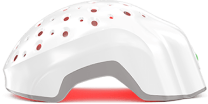
Theradome is a cold laser phototherapy helmet designed to support people with androgenetic alopecia. That means thinning caused by genetics, hormonal patterns, and time itself. It was the first wearable device of its kind to receive FDA clearance for this purpose. Not cosmetic clearance. Medical device clearance. There’s a difference, and it matters, particularly for outcomes and expectations.
Most people dealing with thinning hair hit a point where they’ve tried the usual suspects. Oils. Shampoo “systems”. Supplements. Someone’s cousin’s miracle herb tea. The part that no one likes to say out loud is that hair loss is a real biological process, not a lifestyle flaw. So the approaches that work are the ones that interact with the follicle’s biology, not its feelings.
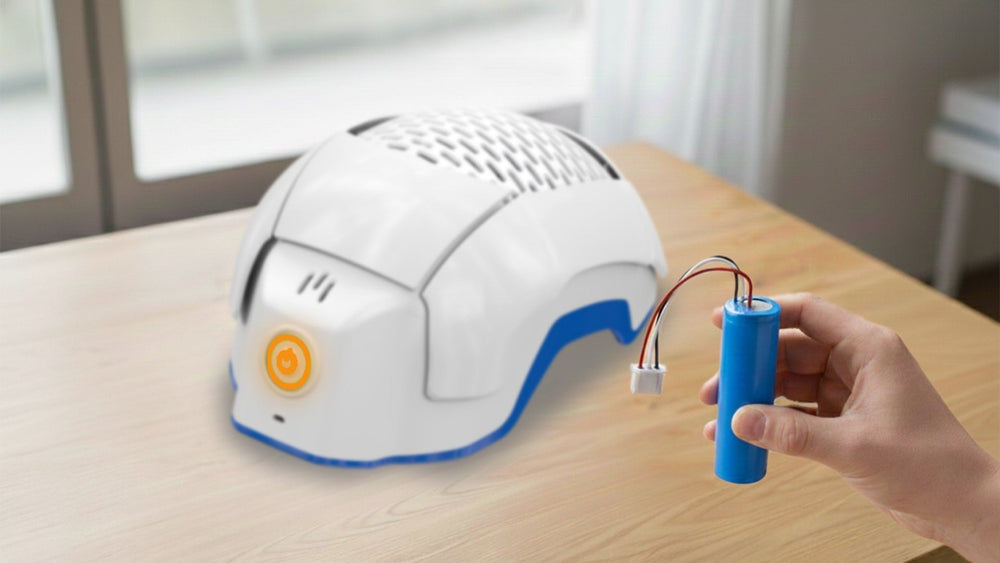
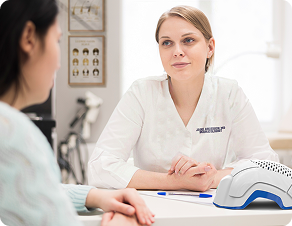
Theradome is used at home. Hands‑free. Meaning you’re not in a clinic chair trying to schedule weekly appointments. You wear it for specific timed sessions. That’s the biggest selling point for many: the ability to be consistent without rearranging your life.
Minoxidil is a topical drug. It influences signaling pathways and can increase growth duration for some users, but needs ongoing use or gains regress.
PRP involves drawing your blood, processing it, and injecting growth factor‑rich plasma into the scalp at a clinic. Some people do very well with it, but it is expensive, requires repeat visits, and is not comfortable for everyone.
Theradome offers another lane.
Non‑drug. Non‑surgical. No injections or clinical scheduling.
It can also be combined with other treatments, though the degree of synergy varies and should be guided by a clinician familiar with your pattern of thinning.
Some individuals like having a device that feels gentle, methodical, and measurable. Something they can use without worrying about complicated protocols, side effects, or pain.
And sometimes people simply want something that doesn’t involve having to remember drops or prescriptions twice daily. Consistency is already hard enough.
Theradome uses Laser Phototherapy (LPT). Not heat lasers. Not burning lasers. Not surgical lasers.
These are Class 3R cold lasers, meaning the energy output is low enough to avoid heat damage, while still carrying enough coherent light to affect cellular metabolism.
Laser light at specific wavelengths can reach down into the scalp and interact with mitochondria inside follicle cells. That sounds technical, but mitochondria are basically the little energy‑making hubs inside cells. When laser light at the right wavelength interacts with them, ATP production can increase. More ATP means cells can perform their normal functions more efficiently. In follicles, that may translate to helping prolong the hair’s anagen (growth) phase.
This is known as photobiostimulation.
To be clear, this is not a “turn on the laser and the hair magically appears” situation. Follicles respond gradually. Hair grows slowly. Improvements are measured over months, not days. The clinical trial data aligns with this timeline.
LED light scatters.
Laser light remains coherent.
Meaning the wavelength and energy delivery remain more focused as they travel into the scalp. That is why Theradome uses lasers, not LEDs.
LED caps may provide superficial stimulation. Cold laser devices like Theradome are designed to penetrate deeper into the tissue where the active follicle structures are located.
This distinction is about physics.
Coherent light travels differently from diffuse light.
And yes, that difference has been tested in actual people, not just lab speculation.
Clinical outcomes matter more than claims. The most referenced evidence for Theradome comes from a 26‑week multicenter, randomized, double‑blind, sham‑controlled clinical trial conducted in the United States.
This wasn’t a “let’s see what happens with a few volunteers” situation. Participants were assigned either:
The users didn’t know which one they had. Neither did the researchers handling assessments at each visit. That design (double‑blind and sham-controlled) is what researchers use when they want to separate real biological change from the placebo effect.
After 26 weeks:
|
Measurement |
Theradome Group |
Sham Group |
Significance |
|
Total hair count change |
+10.4 hairs |
−14.0 hairs |
p<0.001 |
|
Terminal (thicker) hairs |
+4.8 |
−9.7 |
p=0.04 |
|
Vellus (miniaturized) hairs |
+5.6 |
−4.3 |
p=0.04 |
No adverse effects reported.
No burning.
No discomfort.
No scalp irritation.
The simplicity of the protocol (“twice weekly, 20 minutes per session”) helped participants remain consistent, which may explain why the trial achieved statistically meaningful results. Consistency matters in follicular biology. Hair behaves slowly. Devices that encourage repeat use tend to perform better in long-term data.
Theradome is FDA‑cleared for androgenetic alopecia in both men and women.
However, there is an honest nuance:
This is standard across all non‑surgical interventions, including drugs and PRP. Once follicles are structurally compromised beyond regeneration capacity, stimulation alone may not be enough.
This isn’t a Theradome‑specific limitation.
It’s biology.
Clinical data can prove efficacy, sure. But the real test is the bathroom mirror at week twelve.
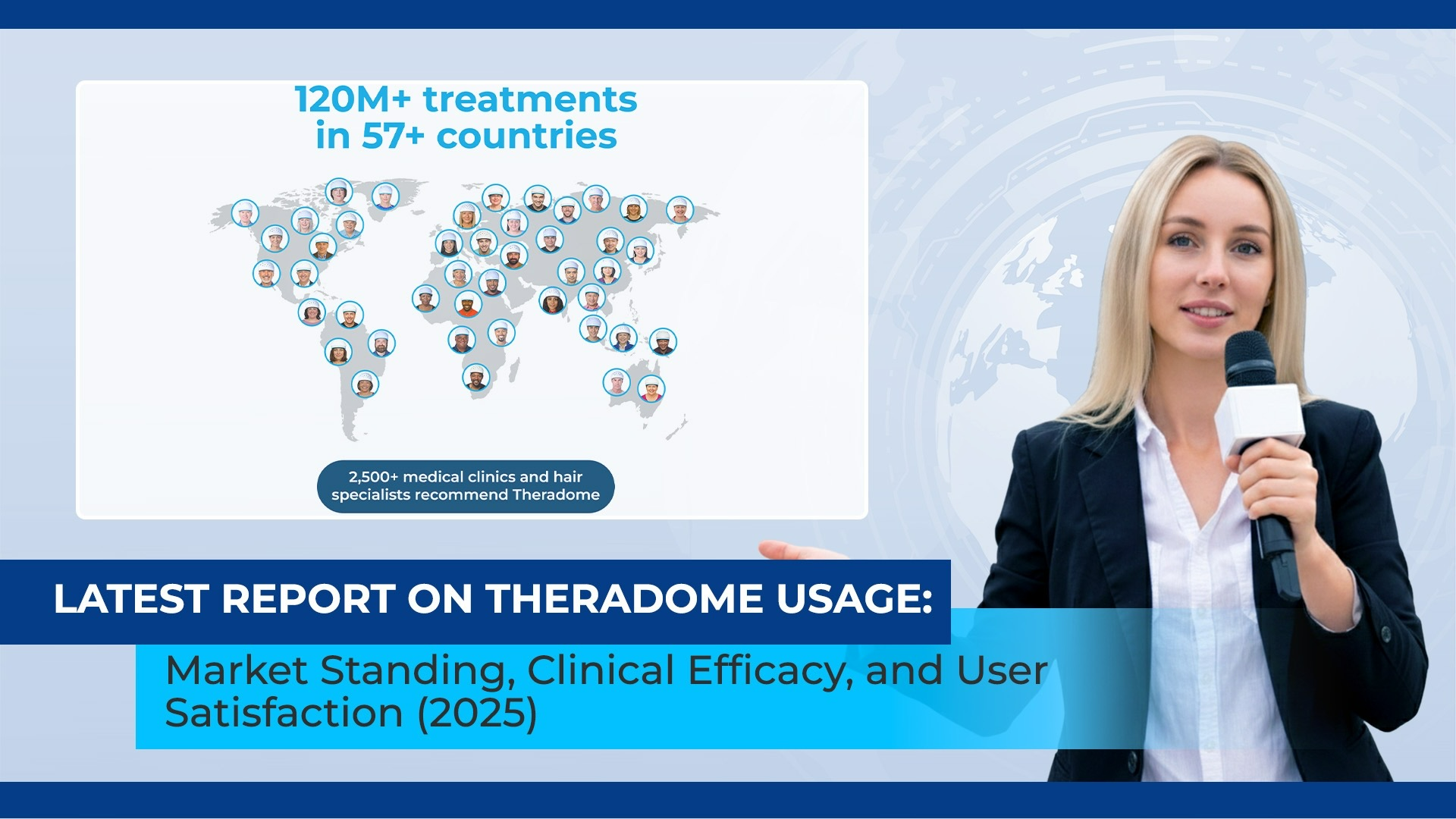
Out of over 6,000 verified customer reviews on Theradome’s official feedback page, a few themes keep circling back — and they're worth noting.
First: consistency makes or breaks results. Users who used the device 3–4 times a week as recommended (and didn’t drop off by month two) were far more likely to report visible improvement in hair density, reduction in shedding, or better scalp coverage… especially those with early-stage androgenetic thinning.
Second: satisfaction doesn’t always mean “regrowth.” For many users (especially women over 40), the most celebrated outcomes were slowing the rate of loss, improving hair texture, and calming scalp inflammation — things traditional shampoos or minoxidil often can’t fix alone.
Third: comfort and convenience mattered. Many reviewers preferred Theradome’s helmet format over comb-style lasers, noting it freed up their hands while delivering uniform light coverage. A good chunk said they stuck with it precisely because it didn’t feel like a chore.
A few cautionary flags came up too. Some users with more advanced thinning didn’t see much change and mentioned frustration if they expected full regrowth. This tracks with clinical findings: LPT isn’t a miracle. It’s a supportive therapy, and it rewards the patient.
Overall, it works well for the right person, if they stick with it, and if expectations are grounded.
(And honestly, that’s more than we can say for most things in hair loss.)
The device design removes the “I forgot” barrier.
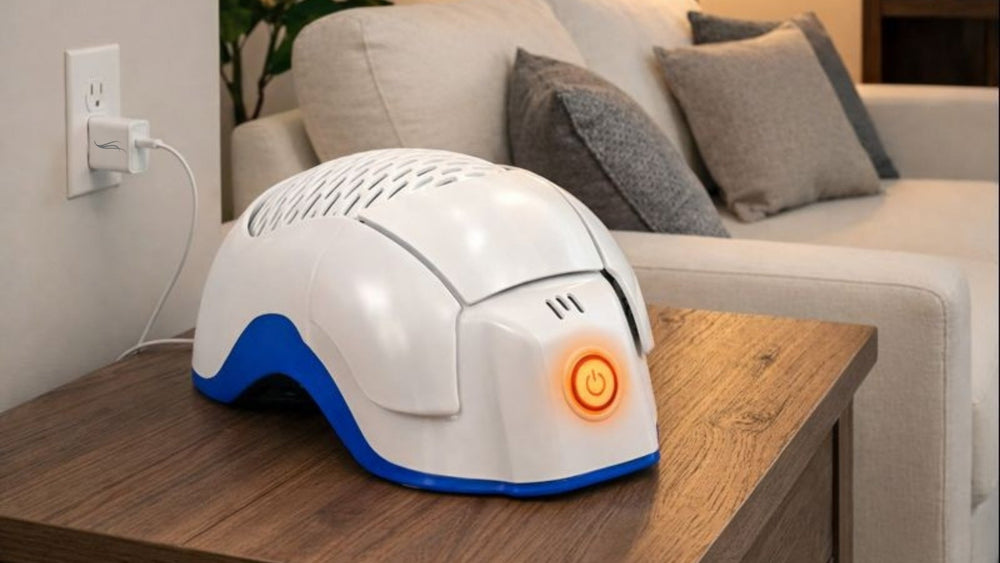
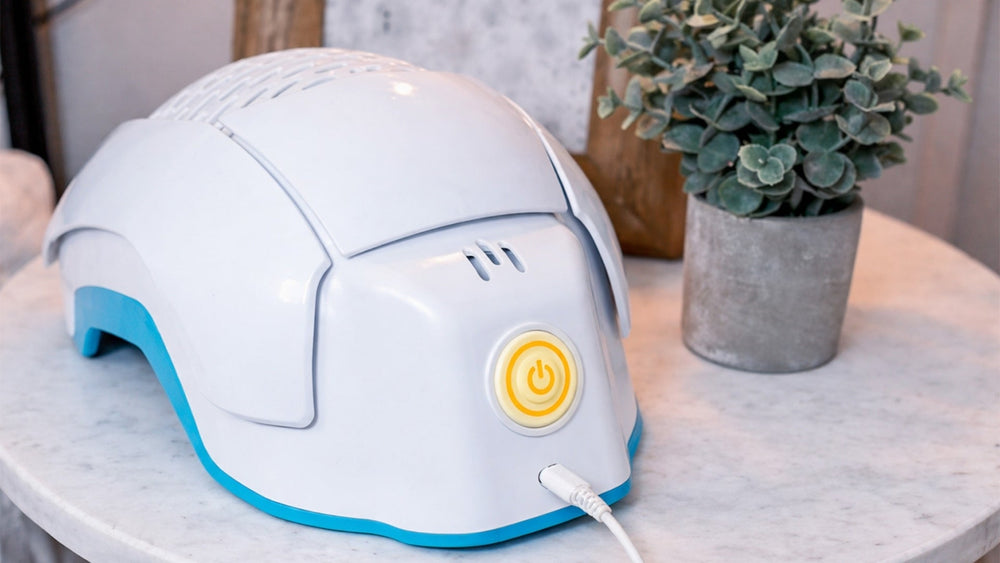
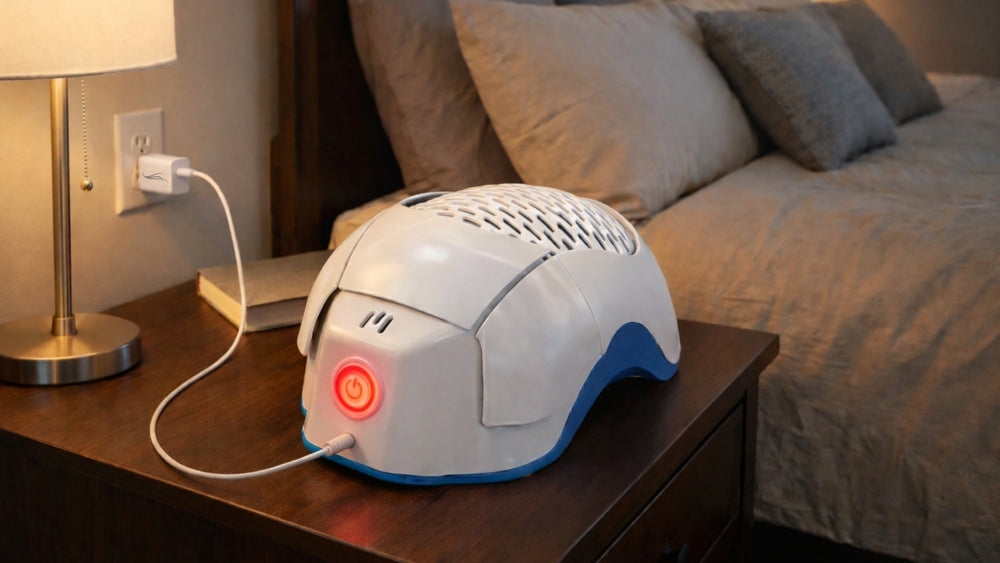
You literally wear it like a helmet, wait the designated duration, and then put it back on its base.
People who struggle with complicated routines tend to do better when there is one task, one tool. A single object associated with progress.
Realistically, most users reported using it while:
No special setup.
No clinic scheduling.
No serums that drip into your eyes if you move too much.
And small detail, but real: the absence of physical discomfort makes a difference. If something hurts, stings, or burns, you eventually avoid it. Cold laser doesn’t bring that problem.
The safety classification matters: Theradome uses Class 3R cold lasers. These are low‑intensity, non‑thermal, non‑surgical. They do not cut or heat tissue. They do not burn the scalp. They are used in rehabilitation and tissue recovery fields for similar energy signaling effects.
The blink reflex protects the eyes under regular use conditions. The device is structured so that the lasers are directed toward the scalp when worn. It is not designed as a shining external beam.
Yes.
Texture does not change follicle biology.
However, thicker or denser strands can diffuse or scatter light, meaning the scalp might not receive as much direct exposure if hair is not repositioned.
Users with very dense or coily textures often benefit from:
These are minor technique refinements, not compatibility limitations.
Hair type ≠ response barrier.
It’s about light reaching the scalp.
How does Theradome compare to other hair loss treatments in cost?
A quick perspective across common options:
|
Treatment |
Approx. Cost |
Ongoing? |
Invasiveness |
|
Minoxidil |
$300–$600/year |
Ongoing |
Topical drug |
|
Finasteride |
$200–$400/year |
Ongoing |
Oral drug |
|
PRP injections |
$1,500–$3,000/year |
Ongoing |
Clinic procedure |
|
Hair transplant |
$6,000–$15,000 (one‑time) |
May require repeats |
Surgical |
|
Theradome |
~$800–$1,000 one‑time |
No consumables |
Non‑invasive |
Theradome is often chosen for its stability of cost. No refills. No monthly payments. No clinical sessions. No subscription.
In these cases, a board‑certified dermatologist or trichologist should evaluate hair and scalp condition. Sometimes treatments are layered. Sometimes surgical approaches become more appropriate.
Knowing who it is not designed for is part of ethical clarity.
Theradome is not a miracle device.
But it is one of the few at‑home medical devices for hair loss grounded in controlled clinical research, biological plausibility, and FDA clearance.
If someone is in the early to moderate stage of androgenetic alopecia, uses the device consistently, and understands the gradual nature of follicular recovery, Theradome can be a meaningful part of a long‑term hair preservation plan.
If someone expects overnight transformation, or if follicles are no longer structurally active, expectations should shift accordingly.
The strength of Theradome lies in its repeatability, its safety, and its ability to let a person do something valid and science‑based at home.
That matters.
Hair loss can feel overwhelming. Not because hair defines identity, but because people want to feel like themselves. Interventions that are safe, clinically grounded, and realistic in their claims tend to support not just hair outcomes, but peace of mind.
Theradome remains a viable and well‑validated option in 2026 for individuals looking to address thinning at home with a device that has been clinically studied and FDA‑cleared.
No drama.
No mystical narratives.
Just biology, light, and time.
Theradome is FDA‑cleared as a medical device for the treatment of androgenetic alopecia. Devices receive “clearance,” drugs receive “approval.”
Typically, no. Once follicles are structurally absent, non‑surgical treatments do not restore them.
Most users begin observing changes at around 12 to 16 weeks, with more noticeable improvements around 6 months of consistent use.
Yes. However, treatment planning should be supervised by a clinician familiar with your case.
Laser Phototherapy is not hormonal. Many postpartum users find it gentle and suitable while regaining hair density, but clinical consultation is still recommended.
How To Replace Battery
What to do when you get a ‘Battery Low’ on your Theradome
Adjusting Helmet Sound on your Theradome
Getting out of System Pause on your Theradome
Best Way to Clean your Theradome
What To Do When Your Theradome Does Not Turn On or Charge
How To Register Your Theradome Manufacturer’s Warranty
How to Install Foam Pads on Your Theradome
What to do when you receive a Laser Error message on your Theradome
What to do when you receive a “System Error” message on your Theradome
What to do if the master switch is flashing red on your Theradome
What to do when you are getting a temperature error on your Theradome

Both FSA (Flexible Spending Account) and HSA (Health Savings Accounts) can be used to buy FDA-cleared medical devices, like a Theradome. If you have been diagnosed with Androgenetic Alopecia you should be able to use both a FSA/HSA accounts to purchase the Theradome. To check eligibility, review your employer’s benefits package or contact your HR department for FSA. For HSA, check your health plan details to ensure it qualifies as an HDHP and verify other eligibility criteria.
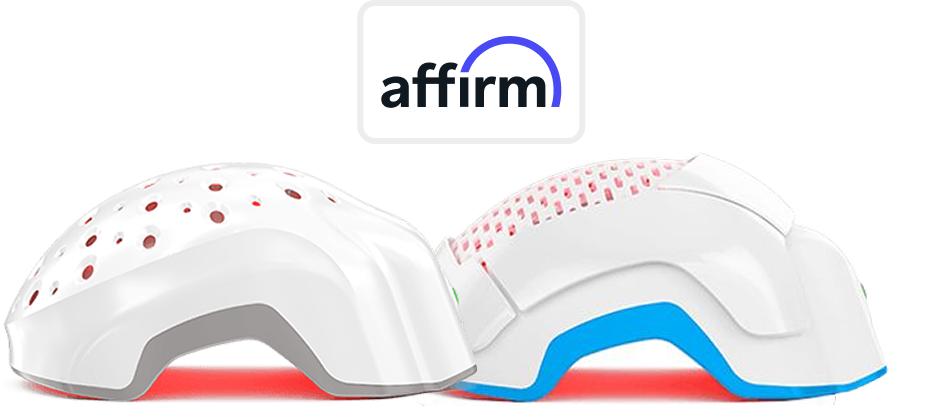
Make your Theradome purchase more manageable with our convenient Affirm financing methods.
How it works
Select Affirm at checkout to see your personalized payment options.

The Complete Hair Recovery System:


The Complete Hair Recovery System: